
When Darkness Came, Strength Was Born:
Janet DeLuca’s Vasculitis Story
At 31 years old, Janet’s life changed forever. After more than a decade of searching for answers—years filled with unexplained symptoms, hospitalizations, inconclusive tests, uncertainty, and fear—she was finally diagnosed with Behçet’s disease, a rare and severe form of vasculitis that causes inflammation in blood vessels throughout the body.
“Because blood vessels run through every part of the body, this disease has the power to affect every organ,” Janet explained. For some, Behçet’s can be mild. For others, it is devastating. “For me,” she said, “I lost my eyesight.”
A Disease Without Answers
Janet’s medical journey began long before anyone knew the name of her disease. In 1984, when she was 20 years old, she began experiencing severe inflammatory episodes that repeatedly landed her in the hospital. Doctors found dangerously high white blood cell counts and inflammation affecting different organs. At one point, she spent an entire month hospitalized with near kidney failure. Soon after, she developed blood in her stool, and doctors discovered ulcers in her colon during testing.
But despite the severity of her symptoms, no one could explain what was happening. “I was tired of being a pincushion and not having any answers,” Janet recalled. Frustrated and exhausted, she left the hospital and tried to move forward with her life. She got married and focused on building a family. For a time, life seemed normal. Her daughter, Heatherann, was born in September 1986.
Then, on April 21, 1987, everything changed.
Losing Her Sight
Janet woke up one morning with sudden loss of central vision in both eyes. Doctors immediately feared a brain tumor. She underwent CAT scans, spinal taps, and extensive neurological testing, but every result came back negative. Meanwhile, her vision continued deteriorating as she developed severe anterior and posterior uveitis and bilateral optic neuritis—painful inflammatory conditions affecting both the eyes and optic nerves. She was referred to the renowned Bascom Palmer Eye Institute in Miami, Florida, where she was treated by leading neuro-ophthalmologist Dr. Lawton Smith. He drained fluid from her eyes for testing, administered steroid injections directly into the eyes, and prescribed high-dose oral steroids.
Janet then spent a year living in Connecticut during tick season while one of Dr. Smith’s fellows diagnosed her with Lyme disease. She was hospitalized for a month back at Bascom Palmer, underwent additional spinal taps and eye fluid cultures, and received daily IV Rocephin treatments after returning home to Marco Island, Florida. A generous donor through the local Lions Club even contributed $10,000 to help cover her medical costs.
In March 1989, Janet traveled to Yale University—then considered a leader in Lyme disease research—only to be told definitively that she did not have Lyme disease. “I was back to the beginning,” she said. “Still sick. Still losing my vision. Still no answers.”
Temporary Remission — Then a Devastating Return
Shortly afterward, Janet became pregnant with her second child, Cody, and unexpectedly, the disease went into remission. But after the birth of her third child, Robert, in March 1994, the illness returned with terrifying force. Within 24 hours of giving birth, she developed severe genital ulcerations extending from “pubic bone to tailbone.” Doctors repeatedly tested her for herpes, but every test came back negative. Still, physicians continued assuming herpes was the cause.
At the same time, her eye disease returned even more aggressively than before. “For two weeks, I would lose my sight completely,” Janet said. “Then for two weeks, I’d get some vision back.” Each flare stole a little more of her eyesight.
As she traveled across Florida searching for answers, Janet never mentioned the presumed herpes diagnosis to many doctors because she was embarrassed and never imagined it could be connected to her other symptoms. That missing piece delayed the diagnosis even longer.
The Diagnosis That Finally Connected Everything
After 10 1/2 years without answers, Janet’s husband, Vinny, insisted they return to her hometown of Boston to seek help. Through a family connection, Janet was seen by a multiple sclerosis specialist at Brigham and Women’s Hospital. Together, they reviewed years of medical records, MRIs, inflammatory episodes, eye disease, and unexplained symptoms. Finally, the doctor asked one last question: “Is there anything else?” Janet hesitated before mentioning the recurring ulcerations doctors believed were herpes, despite repeated negative tests. The physician immediately recognized the pattern. “She said, ‘I know what you have — Behçet’s disease.’”
Janet’s husband initially felt relieved, believing it was better than multiple sclerosis. But the doctor delivered sobering news: Behçet’s could be even more aggressive. The next morning, Janet underwent a pathergy test, where doctors pricked the skin on her forearm with a needle. The site developed the characteristic inflammatory reaction associated with Behçet’s disease. After more than a decade of suffering, Janet finally had an answer.
Living Through Aggressive Treatment
Doctors immediately began aggressive treatment. Over the years, Janet endured methotrexate, Cytoxan® chemotherapy infusions and pills, cyclosporine, Imuran®, steroids, biologics, and countless other therapies. Many caused severe side effects. Some worsened the disease itself. Cytoxan permanently damaged her bladder. Steroids and chemotherapy forced her into early menopause at just 31 years old and later contributed to severe osteoporosis in her spine and hips. At one point, doctors tried thalidomide, but she developed severe welts after only one dose.
By the start of the new year (2000) nothing seemed to be working. Janet was told she was in the one percent of patients where treating the disease actually made it more aggressive. Within a year and a half of finally being diagnosed, Janet lost her eyesight completely.
At times, her condition became so severe that she had to move back into her parents’ home so they could help care for her and her three young children while Vinny continued running his electrical business.
Learning to Mother Through Blindness
Blindness transformed every part of daily life. Cleaning, organizing, cooking, and caring for three small children required relearning everything. Still, Janet refused to surrender to the disease. “What would take me an hour when I could see now took all day,” she said. “But every day I got faster.”
Her husband became an essential partner, especially in the kitchen. Her two young sons grew up knowing their mother as blind, but Heatherann—who was older when Janet lost her vision—struggled deeply at first. “I think it was hardest on her,” Janet admitted. “I also think she was embarrassed that her mother was blind.” Heatherann was old enough to fully feel what had changed: cheerleading, birthday parties, sleepovers, and many normal teenage activities became difficult because Janet could no longer drive everyone around.
At the same time, Vinny was balancing work, caring for the children, grocery shopping, cooking dinner, and taking Janet to countless doctor appointments, all while managing growing medical expenses.
Over time, however, the children became fiercely protective and proud of their mother. When classmates wrote school essays about athletes or celebrities they admired, Janet’s children wrote about her.
Choosing Joy Anyway
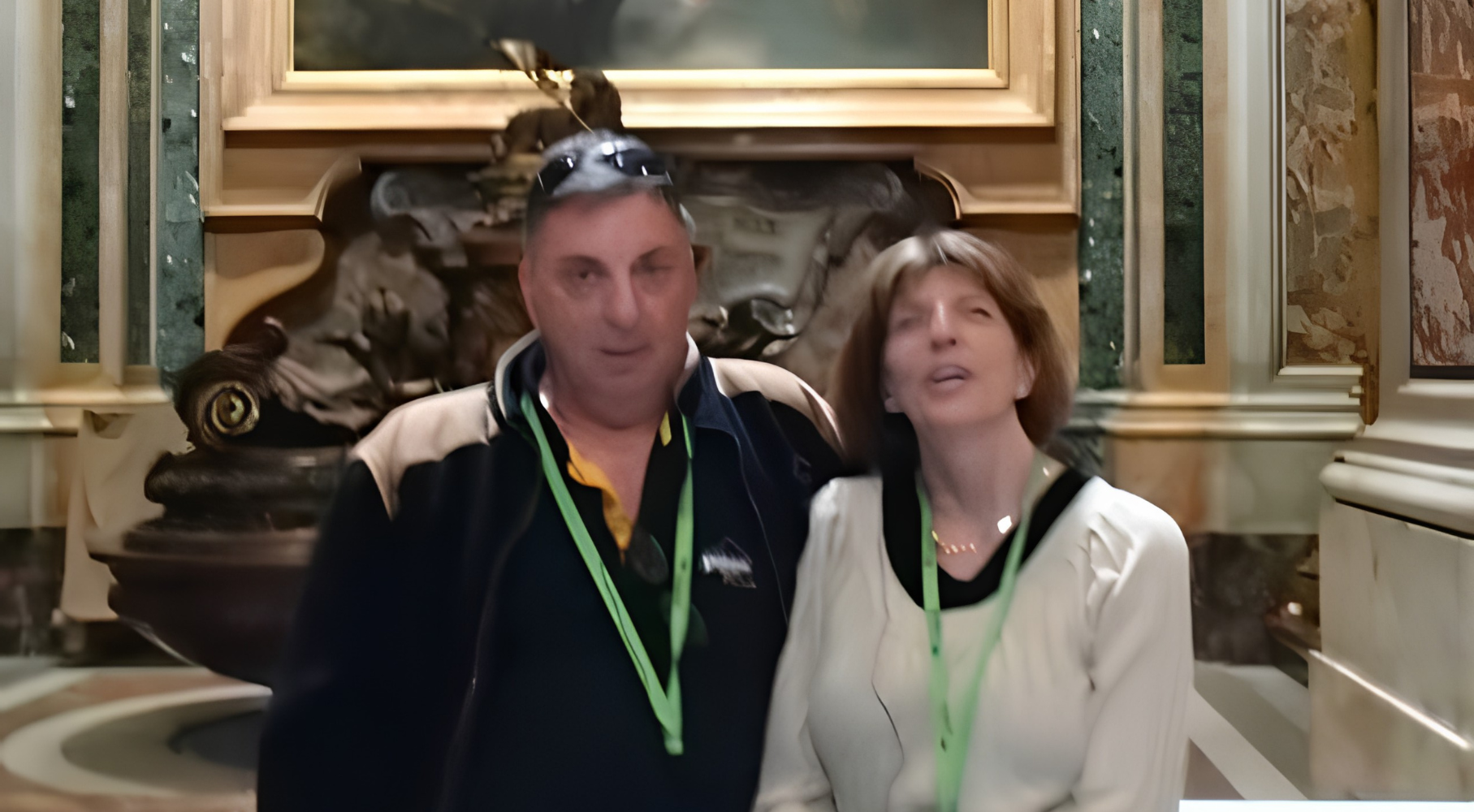
Despite unimaginable hardship, Janet refused to let Behçet’s define her family’s life. “We still did everything other families did,” she said. She and Vinny traveled with their children, took vacations, and built memories together. Later, the couple traveled throughout Europe, including multiple trips to Greece, preferring to rent a car and experience the “real” country rather than tourist destinations.
Today, Janet is 62 years old, a mother of three, and grandmother of five. “I have lived my life like everyone else,” she said. “I’m just blind with a rare autoimmune disease.” Her grandchildren quickly learn that Nana cannot see — and then simply adapt. “People give children too little credit,” she said.


A Mother’s Greatest Heartbreak
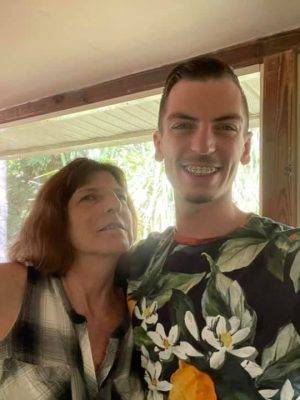
One of the cruelest parts of Janet’s journey is seeing her son Robert battle the same disease. As a child, Robert experienced unexplained illnesses and fevers. By age 16, he developed the classic mouth ulcers associated with Behçet’s disease. Eventually, he also developed eye involvement. “There was no guessing what it was,” Janet said. Now 32, Robert works remotely as a software engineer while undergoing biologic treatments and managing the daily realities of the disease.
“This disease is very cruel,” Janet said. “My heart breaks knowing I passed this on to one of my children.”
Her greatest fear is that he could someday lose his vision too. At the same time, their shared experience has created a profound bond. Robert became passionate about accessibility technology after growing up watching his mother struggle with inaccessible websites and screen readers. Today, part of his work focuses on making websites more accessible for people with disabilities. “I’m very proud of him,” Janet said.
Living With the Long-Term Damage
Even decades later, Behçet’s continues affecting nearly every system in Janet’s body. Over the years, she has developed Graves’ disease, pulmonary disease, hearing loss, neuralgia, chronic colitis, pancreatic insufficiency, osteoporosis, bladder damage, recurrent infections, and other complications related both to the disease and its treatments.
Some medications she once depended on are now financially out of reach. One pancreatic enzyme medication carried a price tag of $30,000 per month without adequate insurance coverage. Yet Janet continues pushing forward with humor, perspective, and determination. “I have found that laughter is the best medicine,” she said. “Making light of situations has always been who I am.”
She also keeps perspective by remembering others facing unimaginable suffering. “There is always a child or young adult dying somewhere,” Janet said. “What I was going through was nothing compared to that.”
A Voice for Others
Today, Janet spends much of her time supporting other Behçet’s patients through online support groups, advocacy, fundraising, and peer mentorship. She hopes to eventually volunteer with the Vasculitis Foundation to help newly diagnosed patients navigate the overwhelming realities of the disease. “There needs to be more support and information for people dealing with Behçet’s,” she said.
Her message to others living with rare disease is deeply personal: “Don’t let the disease control your life. Take each day as it comes. And know that if you need me, I’m always here to talk and be supportive.”
Strength Through Darkness
Janet believes her resilience comes from the values her parents taught her long ago: “When life knocks you down, you get up and keep walking.” It is the philosophy that carried her through blindness, pain, uncertainty, and decades of illness.
“My story is not about what I lost,” she said. “It’s about what I refused to let this disease take.” And despite everything Behçet’s has stolen, it never took her faith, her love for her family, her sense of humor, or her determination to keep living fully.