Every 6 months, we ask our VPPRN community to check-in and tell us how they are doing. The graphs below reflect the scores/ratings of patients with microscopic polyangiitis (MPA) compared to the Network as a whole. Here is what we learned about flares, fatigue, pain, symptoms of vasculitis, and members’ current state of vasculitis at the January 2026 check-in:
Compared to patients with other forms of vasculitis, patients with MPA reported the following:
less flares reported
similar scores for fatigue
higher percentage of patients with GCA reporting no symptoms over the past 28 days
similar scores for pain
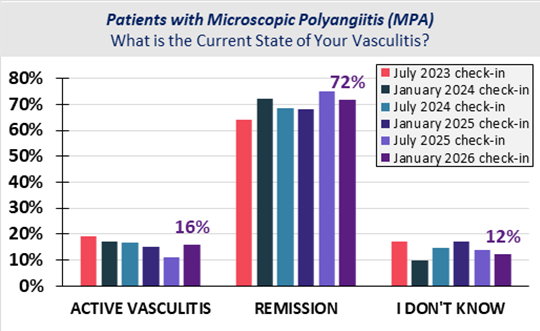
a smaller percentage of patients with MPA reported their vasculitis as currently active.
If you have concerns about your health scores, please discuss with your rheumatologist or primary care provider.
Not a member? Click JOIN THE VPPRN button below.
Already a VPPRN Member? Use the LOGIN button to access your account.
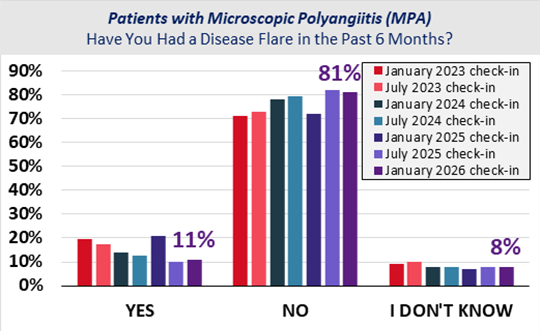
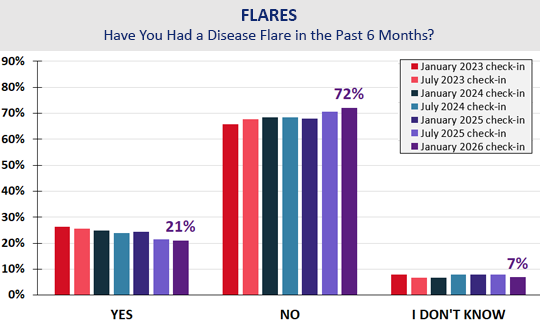
Flare Reporting: Patients with MPA reported less flares than the VPPRN community at the January 2026 check-in. 11% of patients with MPA reported a flare in the past 6 months, compared with 21% of participants across the overall Network.
Patients with MPA
Entire VPPRN Community
FATIGUE and VASCULITIS
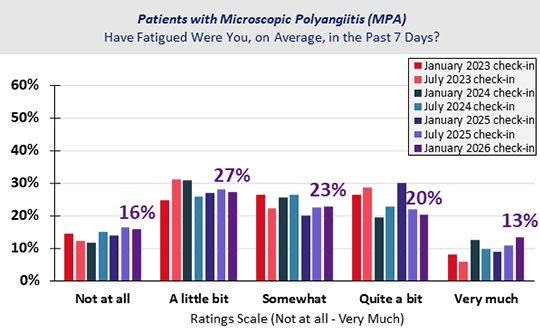
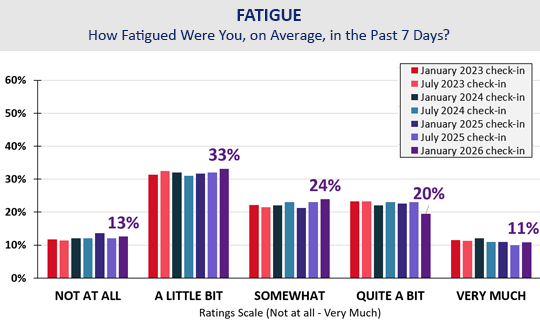
Fatigue: Fatigue was common among patients with MPA, with rates similar to the broader VPPRN community. At the January 2026 check-in, 84% reported experiencing fatigue in the past 7 days, compared with 87% across the Network.
Patients with MPA
Entire VPPRN Community
SYMPTOMS of VASCULITIS
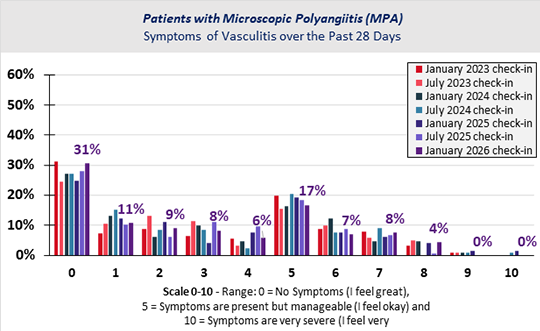
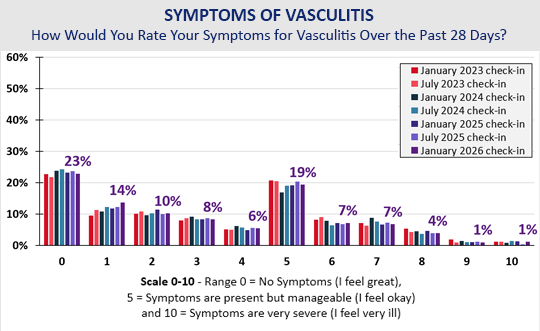
Symptoms of Vasculitis: At the January 2026 check-in, patients with MPA scored their symptoms of vasculitis lower over the past 28 days. 31% of patients with MPA reported no symptoms of vasculitis, compared to 23% in the VPPRN community.
Patients with MPA
Entire VPPRN Community
PAIN and VASCULITIS
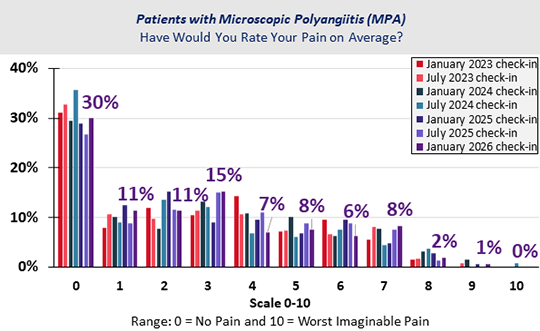
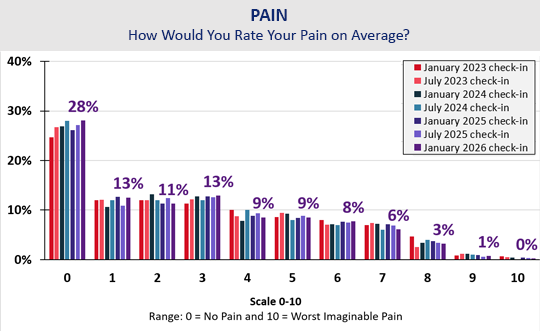
Pain: Patients with MPA reported pain levels similar to those seen across the VPPRN community. At the January 2026 check-in, 30% of patients with MPA reported no pain (score = 0) on average. This is similar to the 28% who reported no pain in the Network.
Patients with MPA
Entire VPPRN Community
MEMBERS' CURRENT STATE OF VASCULITIS
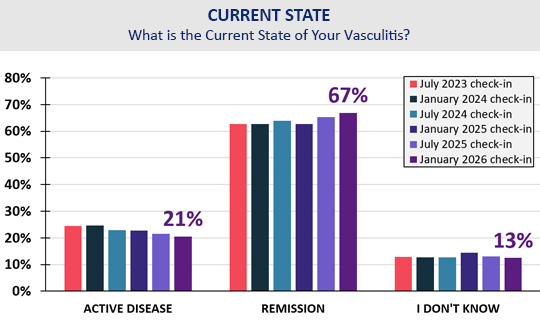
Members’ Current State of Vasculitis: Patients with MPA reported active disease at rates similar to the overall VPPRN community. At the January 2026 check-in, 16% reported their vasculitis as active, compared with 21% of participants across the Network.
Double Match Day is here—help us celebrate 40 years by raising $40,000.
People living with vasculitis rely on support, research, and connection every day.
Today only, your donation will be matched dollar-for-dollar, helping us reach more patients, fund critical research, and ensure no one faces vasculitis alone.