
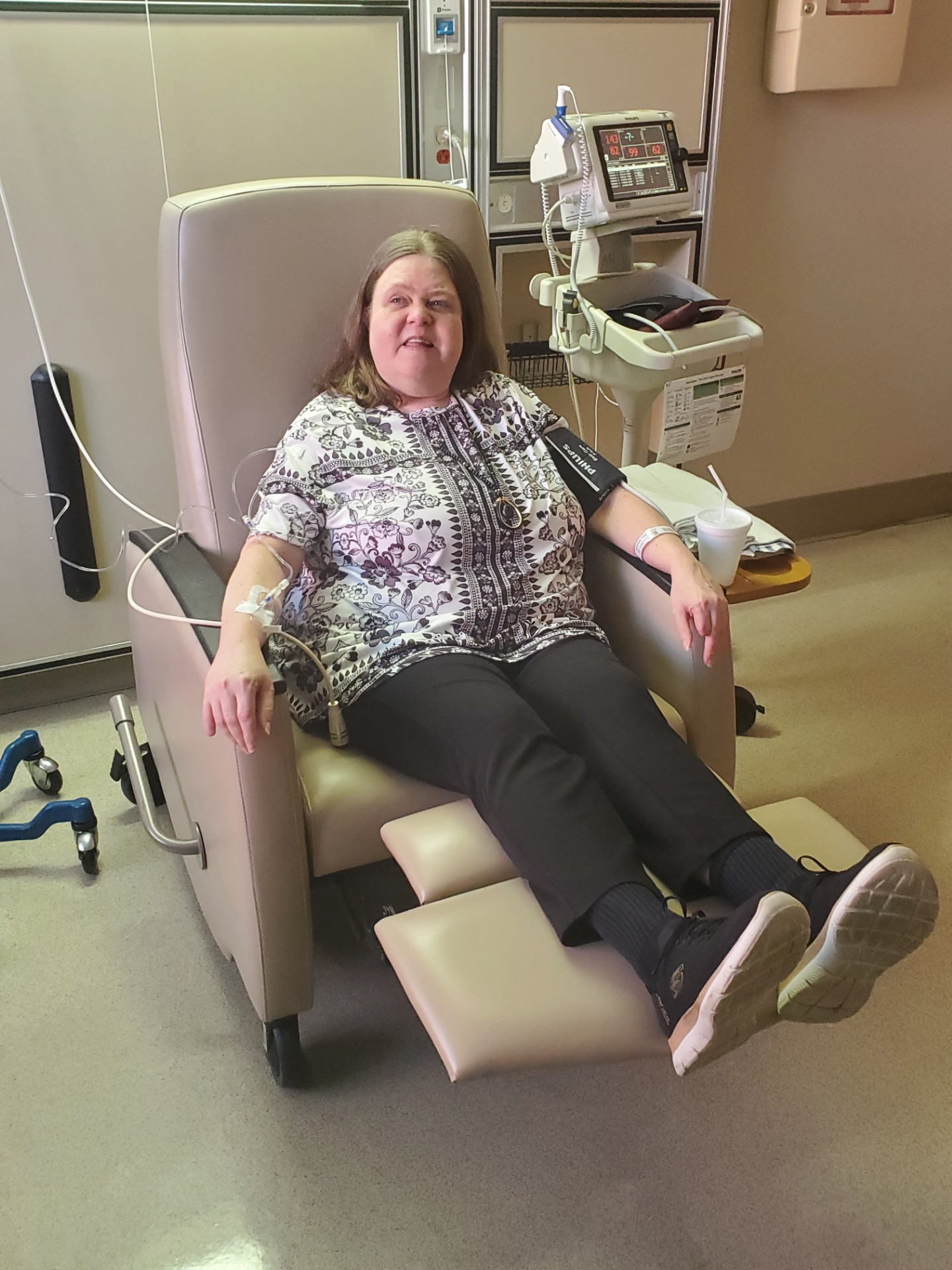
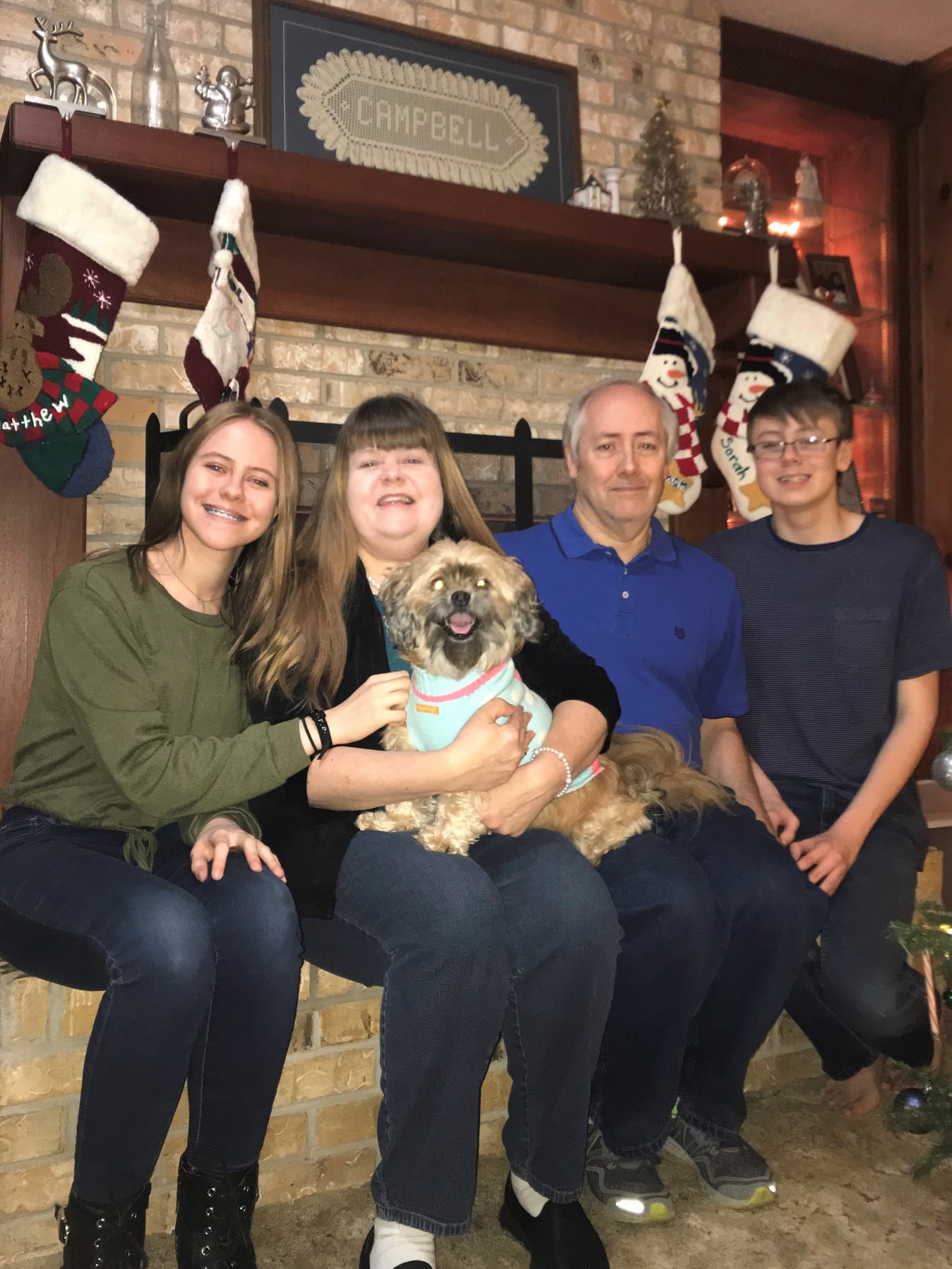
Fifty-seven-year-old Tonya is a devoted teacher from Vicksburg, Mississippi, who has always centered her life around family, faith, and service. She and her husband, Carl, raised twins, Sarah and Matthew, after facing early infertility. For decades, she poured her heart into her public-school classroom and her church, where she taught Sunday school.
In October 2020, Tonya’s life changed dramatically when she was diagnosed with granulomatosis with polyangiitis (GPA). Her journey to that diagnosis, however, was long and frightening. Her earliest symptoms—sinus infections that never cleared, a persistent cough, and nasal crusting—were followed by pain in her hands and feet and overwhelming fatigue. Even an eardrum rupture didn’t lead to answers. For three months, Tonya visited a small clinic and an ENT, receiving only antibiotics.
Finally, Carl insisted she go to the hospital. A CT scan revealed a mass in Tonya’s lung, raising fears of cancer or tuberculosis. A biopsy ruled out both, but still no one knew what was happening. A lung scope showed pneumonia, and she was discharged with a rheumatology appointment—six months away.
Tonya didn’t have six months. She worsened quickly and went to the University of Mississippi Medical Center at the height of the COVID pandemic. “My family could not visit me. I was alone with doctors and nurses for a week,” she recalled. A kidney biopsy finally confirmed GPA.
By this point, blood flow to Tonya’s fingers had become dangerously low. Oximeters couldn’t read her oxygen levels, and her fingertips turned purple. Off-label Viagra® improved circulation, but she still lost two fingers to amputation in June 2021—her right pinkie and her left index finger.
Tonya had never heard of vasculitis. “With southern accents, I heard Wagoneer’s disease,” she joked. Treatment began immediately with six months of Cytoxan® and high-dose prednisone. The side effects were severe, including a 50-pound weight gain and muscle weakness in her legs, which caused problems when she had to step up. “As long as the surface was flat, I could walk,” Tonya said.
Long-term therapy continues today. She transitioned from Rituxan® to Ruxience® due to cost; both bringing fatigue and other side effects. Her rheumatologist is considering stretching her infusions to nine months, causing Tonya to worry about this triggering a flare.
Living with Vasculitis
GPA affects Tonya daily. “Vasculitis is exhausting,” she said. Despite adequate sleep, she battles fatigue, chronic sinus problems, acid reflux, and painful bacterial rashes that have formed on her arm and feet. She has stage 3 kidney disease, high blood pressure, and increasing short-term memory issues. With a weakened immune system, she masks in public and works hard to schedule her many medical appointments around her husband’s job.
The disease has forced her to slow down, but she has learned to adapt. “I prioritize what I want to accomplish each day and take frequent breaks.” To prepare for last Christmas, Tonya started early to create a welcoming home for her family and donated numerous boxes to charities. She recently visited her daughter in Hattiesburg and climbed stairs—slowly, but proudly. “Pushing myself a little more each day makes me feel good about myself.” Gaining her strength back, Tonya will soon do things that once seemed impossible when she was first diagnosed.
Emotional Challenges
Emotionally, the impact has been profound. “I grieve for the way my life was before this disease,” Tonya shared. Losing her kindergarten classroom, missing friendships, and feeling isolated have taken a toll. Steroid-related weight gain affects her confidence, and losing two fingers was painful for someone who once played piano and loved artistic hobbies.
Tonya takes medication for depression, but she also leans on faith, gratitude, and new creative outlets such as painting, reading, and journaling. “I make sure to spend time with supportive people. Stress makes my disease worse.” Her faith remains central: Praying, worshipping, and reading the Bible help anchor her.
Finding Support and Making Life Changes
Tonya has made meaningful lifestyle changes—eating more fruits and vegetables, reducing salt, and walking regularly. Since reaching remission in 2021, she hasn’t experienced a flare, another reason she’s hesitant to adjust her infusion schedule.
One of the most helpful resources for her has been the Vasculitis Foundation (VF). “As a patient who had just been told by her doctor that she has an extremely rare disease, which most of the world including many doctors had never heard of before, the VF website became my manual,” she said, “to learn about vasculitis and GPA, and then advocate for myself during doctor appointments.”
Tonya completed the VF’s vasculitis journey course offered live via Zoom where people who have been diagnosed with vasculitis explore behavioral strategies from the Navigating Your Vasculitis Journey Guidebook together. Through Facebook, she connected with a GPA-specific support community where she has made “amazing friends.”
At her university hospital, Tonya often shared her story with medical students. “I think I learned more than they did,” she reflected, noting how the experience strengthened her voice as an advocate for herself and others.
A New Perspective — and Hope Ahead
Tonya’s diagnosis reshaped her outlook on life. Family memories matter more than ever, and she looks forward to watching her children build their futures. Her hope is firmly rooted in faith. “Jesus gives me hope. He will provide me with the strength to get through anything.” She also hopes for a future cure for vasculitis.
For those newly diagnosed, Tonya’s advice is compassionate and practical: See a rheumatologist. Learn everything you can. Take the vasculitis journey course through the VF. Join a support group. And remember—you can still live a long, meaningful life with treatment.