
Through Loss, Motherhood, and Illness:
Sahala Sufair’s Journey to Hope
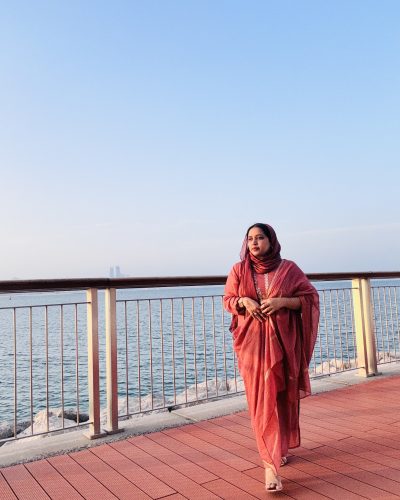
Thirty-year-old Sahala never imagined that a small pain in her neck would become the beginning of a life-changing journey. Originally from Kerala, India, and now living in Doha, Qatar, with her husband and young daughter, her story is one of survival, resilience, heartbreak, and hope while living with Takayasu arteritis (TAK).
Sahala got married in 2019 and about five months later she went to Saudi Arabia to stay with her husband, Sufair. Even before traveling she was already having neck pain and had checkups in India. Not long after, her health began changing in ways she could not explain. “I suddenly started losing weight,” Sahala recalled. “I was around 55 kg, and my weight dropped to nearly 49 without trying.”
The First Signs Something Was Wrong
Along with the weight loss came pain on the right side of her neck, near the carotid artery. What initially seemed like throat pain began to feel more concerning. “Whenever I touched that area, I could feel something moving or pulsating there like a small ball,” Sahala said.
Blood tests including erythrocyte sedimentation rate (ESR) and C-reactive protein (CRP) showed inflammation, but doctors were unable to identify the cause. “They told me it could happen because of things like cough or fever, so they were not too worried at the time,” she said.
That same month in Saudi Arabia, Sahala became pregnant. What followed was one of the most physically and emotionally difficult periods of her life.
Pregnancy, Grief, and Unanswered Questions
“My pregnancy was extremely difficult,” Sahala said. “I had severe vomiting almost throughout the entire pregnancy.” She was hospitalized repeatedly because she could barely eat or function. Meanwhile, her mother was fighting ovarian cancer back home in India. Then came another devastating blow.
“My mother was only 39 years old when she passed away suddenly while I was seven months pregnant,” Sahala said. “Losing my mother during pregnancy completely shattered me emotionally.” And she still had no idea she was living with TAK.
After giving birth, Sahala continued searching for answers. When her baby was around seven months old, she began visiting doctors repeatedly because the symptoms would not go away. She experienced ongoing throat and neck pain, weakness, and exhaustion, but no one could explain why. Eventually, an ENT specialist grew concerned and advised advanced imaging, including a CT angiogram. “That was the moment my life changed,” she said.
Living With a Rare Diagnosis
The scans revealed TAK, a rare form of vasculitis that causes inflammation of large blood vessels, including the aorta and its branches. She was immediately referred to a rheumatologist and started on steroids, methotrexate, and later tocilizumab injections. But the diagnosis came with another painful sacrifice. “At that time, my baby was only seven months old, and I was advised to stop breastfeeding because of the medications,” Sahala said. “That emotionally broke me.”
Already grieving her mother while adjusting to life as a new mother, Sahala suddenly found herself facing a serious chronic illness. One conversation with a doctor left a lasting emotional scar. “I was told that I might not live long and that maybe only six months were left,” she said. “I was also told to keep some distance from my baby because of my condition and treatment.” In her mid-20s, Sahala felt her world collapsing.
The Emotional Weight of Fear
“I constantly worried about my daughter and wondered how she would live without me if something happened,” Sahala said. “There were days when I completely lost hope.”
Then, during one difficult afternoon at home, she searched for her disease on YouTube for the first time. There, she came across a video connected to Christian Medical College (CMC) Vellore. In the comments section, someone mentioned receiving treatment there for the same disease. “My husband encouraged me to go there for another opinion,” she said. “That decision changed my life.”
At CMC Vellore, for the first time, doctors explained her condition with clarity and compassion. Specialists told her she had severe blockages in her carotid and subclavian arteries, but they also gave her something she had not felt in a long time: hope. “They told me treatment and procedures could help me live a normal life,” Sahala said. Doctors also explained the seriousness of the disease and warned that without treatment, complications such as stroke or paralysis could occur.
In 2021, Sahala underwent her first angioplasty procedure on her right carotid artery and right subclavian artery. Her left subclavian artery was already completely blocked, though she was still able to use her arm normally. Just three months later, her right subclavian artery became blocked again, requiring another angioplasty.
Years of Stability and Adjustment
Despite the setbacks, the following years brought periods of relative stability. Her medications were changed from tocilizumab to tofacitinib alongside aspirin, with steroids added during flares. For the past four years, Sahala has continued her treatment journey while living in Qatar with her husband and daughter and maintaining regular follow-ups with CMC Vellore.
Then, in June 2025, new symptoms appeared. “I suddenly experienced numbness on my left side and became very frightened, thinking I might be having a stroke,” she said. She went to Hamad Medical Corporation in Qatar, where she was evaluated by rheumatologist Dr. Aiswarya, but initial tests did not reveal anything alarming. During a later vacation in India, however, the symptoms returned. A Doppler scan showed a clot in her left carotid artery. CMC Vellore advised immediate intervention.
Urgent Treatment and Another Setback
In July 2025, Sahala underwent surgery to remove the clot from her left carotid artery. “Thankfully, it went well, although it was physically and emotionally difficult,” she said.
After surgery, her medications changed again. She was started on adalimumab, methotrexate, low-dose prednisolone, aspirin, and Plavix®. Yet, over the following months, she once again became extremely weak. Tests showed elevated inflammation markers and significantly high liver enzymes. Because the disease remained active, doctors recently transitioned her treatment into infliximab IV infusions. After her first dose, she finally began seeing encouraging signs. “My blood tests are now showing improvement,” Sahala said. “My inflammatory markers have reduced, which gives me hope.”
As part of her treatment journey, she was also diagnosed with latent tuberculosis due to the increased infection risks associated with immunosuppressive medications. She has since started rifampicin therapy and said the treatment has been manageable so far.
Living With Uncertainty
Today, Sahala’s right carotid artery is not fully blocked, but her left carotid artery is completely blocked and a clot remains present. She is currently consulting with a vascular specialist in Qatar regarding the possibility of open vascular surgery, while waiting for opinions from her doctors at CMC Vellore, including her cardiologist, Dr. George Joseph, and rheumatologist, Dr. Ruchika Goel, before making any decisions. “At this moment, I am not in remission,” she said. “Sometimes that uncertainty is emotionally exceedingly difficult because I do not know when things will become stable. But I still hold onto hope every day.”
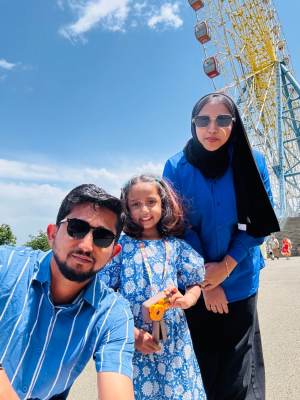
Through every challenge, one thing has remained constant: her determination to stay present for her family. “My biggest dream is simply to watch my daughter grow up,” she said. “I want to support her through every stage of life and be present for all the important moments in her future.” Sahala said her daughter gives her strength during even the hardest days. “She is the reason I continue fighting.”
The Support That Kept Her Going
Sahala also credits her husband for standing beside her through every setback, hospitalization, and emotional struggle. “Without him, I do not think I could have survived the emotional and physical challenges of this disease,” she said.
Before her diagnosis, Sahala had never even heard of vasculitis or TAK. Now, she hopes her story can raise awareness about rare diseases and the importance of early diagnosis. “If I could say one thing to someone newly diagnosed, it would be this: Do not lose hope,” she said. “Even during the darkest moments, there is still hope. Finding the right doctors, the right treatment, and the right support system can profoundly change your life.”
One quote continues to guide her through the uncertainty: “This disease is part of my life, but it is not my entire identity.”