
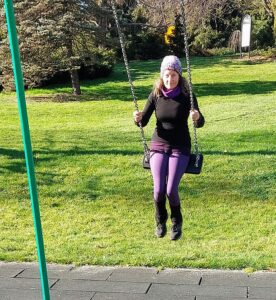
 Early Symptoms and Misleading Signs
Rosy’s diagnosis came in July 2022, but her story began months earlier with what seemed like a simple cough. Initially, she chalked up her cough to breathing in spices while making pickles. But the symptoms didn’t stop. “The cough never really went away and progressed to coughing small amounts of bloody phlegm,” she said. “Then strange things started happening—swollen glands, joint pain, earaches, sinus issues, bleeding from the nose. It was like my body was giving me clues, but I couldn’t read the message.”
She brushed off many of the early signs—pain that came and went, headaches, fatigue, breathlessness, even a blue-mottled appearance of her skin in a hot bath, which turned out to be COVID-19. Still, Rosy kept going—working outdoors in the cold, pushing through each day. But eventually, her body forced her to listen.
Finding Strength Through Lifestyle and Mindset
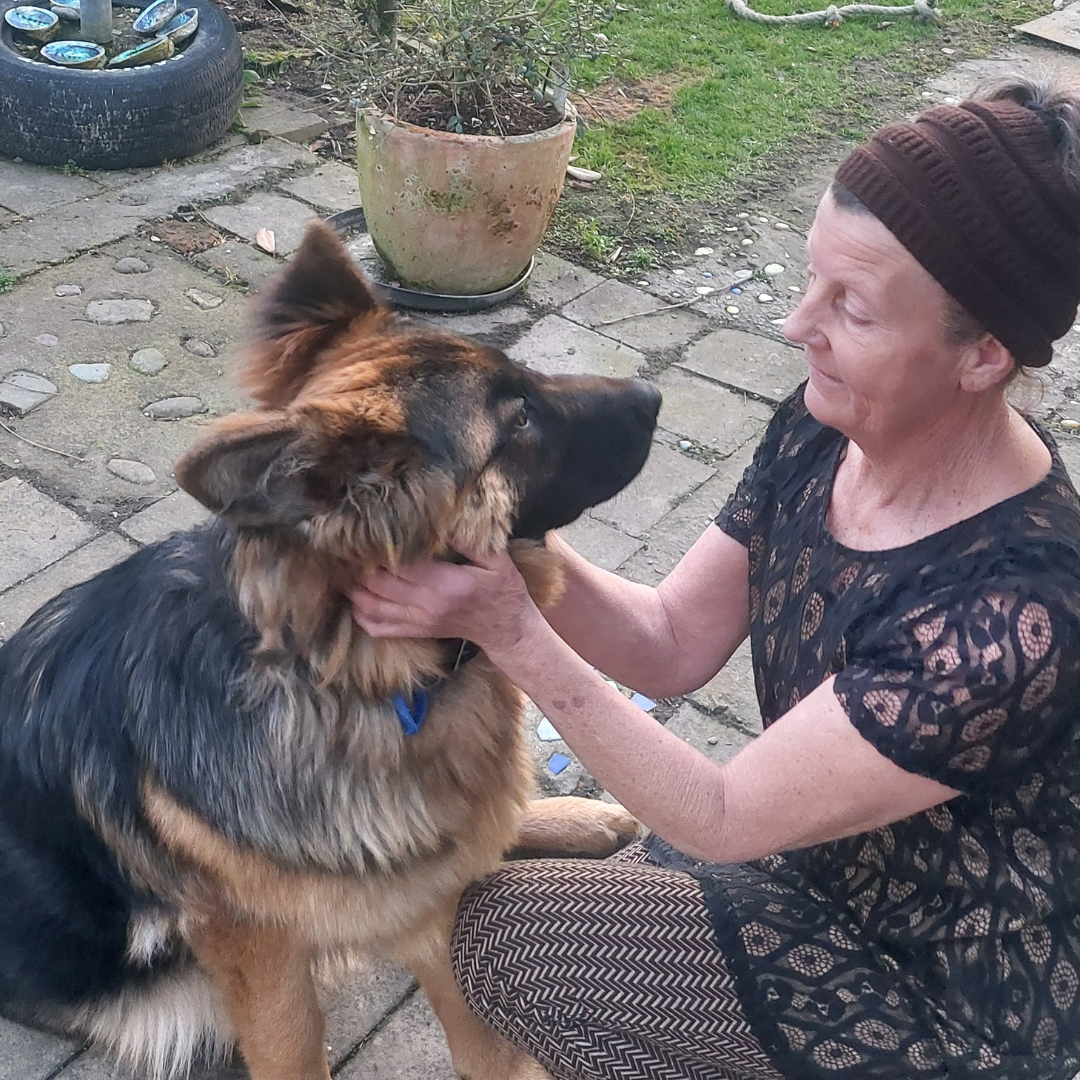
With a job that kept her physically active and her faithful German Shepherd pup, Charlie, by her side, Rosy made it her mission not just to survive—but thrive.
Rosy’s journey is powered by more than medication. It’s sustained by mindset, research, music, and motion. “That first year, I became one of the top 0.01% of Spotify users for Chopin and Ultravox,” she laughed. “Chopin helped me sleep. I also kept a daily journal, writing down my fears, frustrations, and everything I couldn’t say out loud.”
Her mental resilience came from two decades of being a single mother to three now thriving young adults—a chemist, a future doctor, and a creative bright spark. And now, she finds purpose in marathon walking, competing in the Dunedin and Christchurch marathons annually, often finishing in the top 15%. “I’ve completed multiple 10km and five 21km walks. These became my goals after getting out of hospital. I wanted to do something I’d never done—and now, I can’t stop.”
Thriving Despite Challenges
Rosy credits exercise, Mediterranean-style eating, and a refusal to give up as her lifelines. But she also acknowledges the complexity and unpredictability of autoimmune disease. “People look at you and think you’re fine. They don’t understand how life-threatening vasculitis can be. I stopped explaining it a long time ago. I know what it is. I know the risks.”
In August 2025, Rosy celebrated a major milestone—discontinuing immunosuppressant treatment after two years without relapse. It was a moment of profound victory.
To newly diagnosed patients, Rosy offers both practical and emotional guidance: “Use a notebook to track your questions for your specialist and any symptoms. Don’t be afraid to talk to your GP or a mental health professional. Hold onto hope—and do something each day that reminds you of who you were before this disease.”
“Keep doing what makes you feel alive. Even if it’s small. A breath, a walk, a piece of music. You’re still here—and that means everything,” she added.
Inspiring Others and Looking Ahead
Rosy hopes to talk to medical students about vasculitis and how easily it can be missed. She also dreams of writing a book about her journey, blending poetry and storytelling. “I know I have vasculitis—but I have my life, and I love it. Simple, quiet, and mine.”
She signed off with the mantra that has carried her through every flare-up, marathon, and sleepless night: “If you look, you can always find the sun. It is always there.” And indeed, Rosy Thomas is still here—walking toward it.