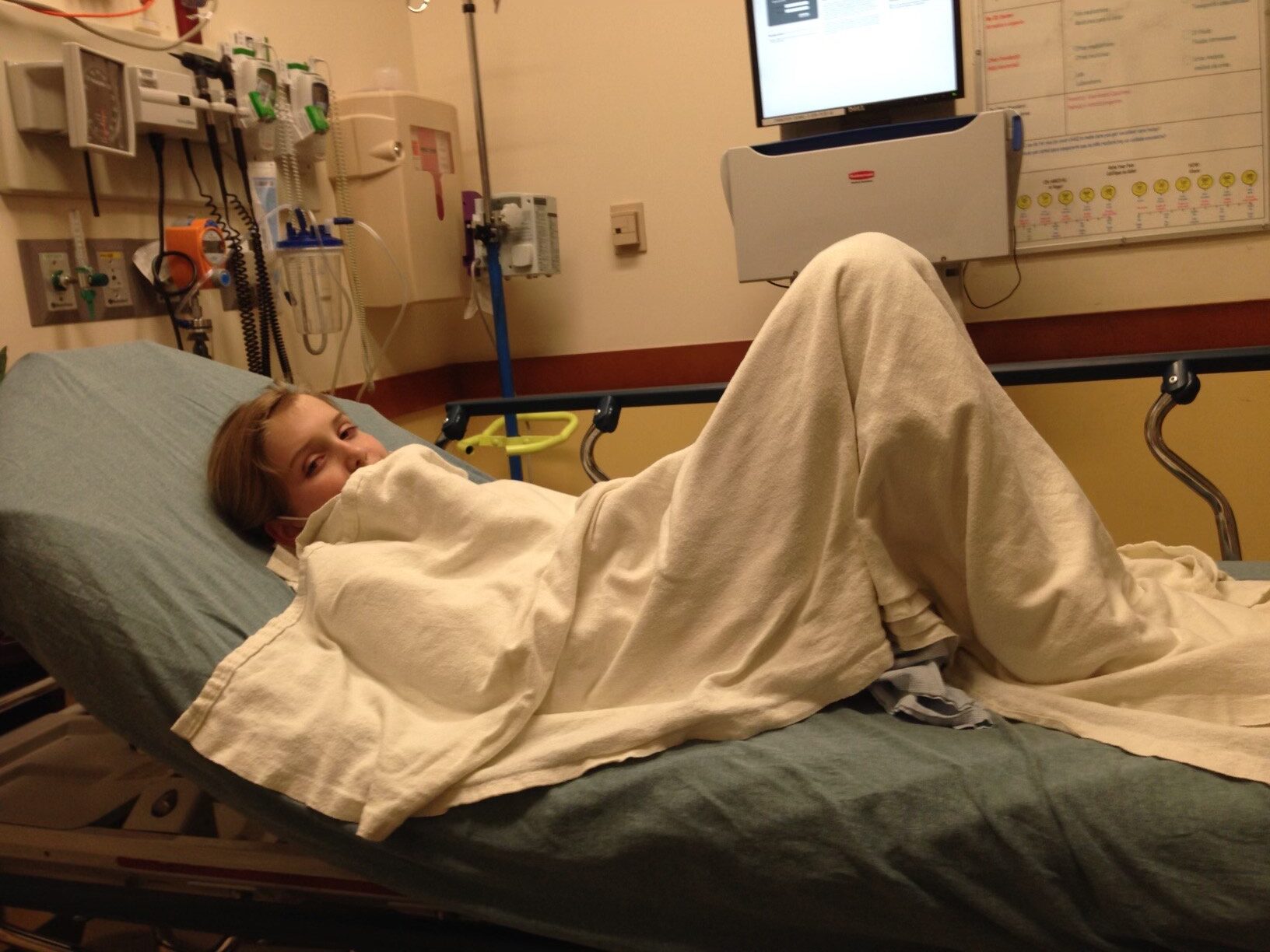
For the Girl Who Fought: A Chronic Illness Journey

Childhood GPA Survivor: Diagnosed at Age 10 

In 2013, at age 10, Madeleine Shrull was diagnosed with granulomatosis with polyangiitis (GPA) just before the holidays. This came after six weeks of sickness, a condition her doctors initially misdiagnosed as a sinus infection. “I feel like that wasn’t even me, just a story about someone else I once heard,” she said, reflecting on the foggy, traumatic period.

Before her hospitalization, overwhelming fatigue left her winded after a short walk from her bed to the bedroom door. She slept through entire school days, only summoning enough energy to move between classrooms before needing to rest again. She remembers a “numb feeling,” describing herself as a “lifeless shell of a fifth grader, moving through the hallways like a zombie,” feeling like all the life had been sucked out of her.

Years later, while noting how the disease had impacted her organs and bodily functions, she recalls a doctor trying to make light of the obvious shock at her records by saying, “I mean, this is what an autoimmune disease does!” For Madeleine, hearing a doctor confirm the permanent changes to her body, affecting her ears, nose, throat, kidneys, lungs, eyes, skin, and joints, only brought back that same empty feeling she used to live in.
Hospital Memories and Early Medical Challenges 

For her, most of the time in the hospital is a blur; she scarcely remembers the time they spent thinking she had leukemia or lupus, the constant awakenings for tests and procedures, including spinal taps, biopsies, surgeries, or the pain of recovery. To Madeleine, the hardest part is her inability to remember the people: the nurses, friends, family, and eager medical students who visited her room to give their best guess or even just to observe. She only remembers the numbness and pain, which was dulled by an IV drip of morphine, a treatment she now feels was inappropriate for a child her age.

The few pictures taken during that time she looks back on with a mix of love and heartache. Seeing the little girl in those pictures only reaffirms what she has long known and said: “Everything I have ever done, and everything that I will continue to do, is for that little girl.” She prides herself on living the life her 10-year-old self only dreamed of; a life that at one point she didn’t believe she’d ever get.

Lingering Reminders of Chronic Illness

The past is ever-present in her life; this is something she views no one can ever truly escape. It’s in the small things: the long-standing association of eggs with the taste of the high doses of prednisone that years of treatment have left her with, the smell of rubbing alcohol that will always transport her back into that hospital room, and the sight of a sharps container that brings back memories of hiding them (and with that, all evidence of her methotrexate prescription) in her college dorm, not wanting to explain its existence to everyone she met, holding onto hope that she could be seen as a “normal” college kid.

Even the sight of an IV leaves a taste in her mouth, a remnant of the rituximab infusions she received for so long. Every mirror she walks past gives her a visual reminder of the destroyed cartilage in her nose, a result of the degenerative nature of this disease.

Psychological Struggles: Feeling Like a Fraud

She finds it difficult to talk about her disease now, as her healthy days far outnumber her sick ones. For years, she pretended it didn’t exist, feeling like a fraud whenever it came up. When her lab results came back clear, this feeling, which she describes as “a cruel and twisted feeling: the wish to be sicker,” washes over her, a feeling she believes is common among those with chronic illnesses.

She describes this alienation from her own disease as a double-edged sword that is frequently felt by those with similar diagnoses. “Either you’re in the trenches of sickness, and your disease is consuming you, your health, and every waking moment, but you feel validated in your disease,” she said, “or you’re having healthier days, you feel fine, and from the outside you look like every healthy person around you, leaving you walking around feeling like a part of you is missing, like a fraud, like you need your disease to feel like yourself. Like you need to prove to yourself that it’s real; that what you went through was real, and it was really you.”

Acceptance and Gratitude: Learning to Live Fully

When those thoughts come up for her, Madeleine is reminded of the words of her doctor: “Your disease only has you, without your body, it has nothing to live in. Yet you don’t need it to live; you were a full person without it and can, will, and should be a full person with it.”

Her relationship to her disease is much different now, saying, “I have learned to love the thing I most wish had not happened,” believing it’s a gift to exist, and with that gift, includes all the suffering of life. Grateful for the prednisone that gave her life back, even with its painful side effects that stuck with her for so long. Thankful for the hearing and vision loss, the lingering colds, and sinus infections that plague her. To Madeleine, those are all gifts, because it’s a gift to have survived.

Life After Medication: Rediscovering Herself

After years of medication, including injections of methotrexate and infusions of rituximab, Madeleine has been off meds for almost a year. This was a difficult choice she made with her doctors, a conversation that was spearheaded by her desire to see if she could live a life untethered to the aggressive medicine, to finally feel like herself again, the little girl she used to be, who had never even heard of GPA.

A year later, the too-familiar side effects she experienced from the methotrexate, including nausea, headaches, stomach pain, rashes, red pinpoint spots on her skin, and the thinning of her hair, have long since left her body, but never her memory.

Madeleine, now 22, thinks about her 10-year-old self often, a confused little girl who felt her life was over, but who was simultaneously shielded from the worst by those around her. She thinks about the flare-up at age 13 that hospitalized her briefly, and the ensuing fear that she may never go back to the life she used to know. She knows now what she didn’t then: a diagnosis doesn’t have to mean your life is over.

“It will never be the same, that’s for sure,” she said. “It may be small, and it may be extremely hard to find at times, but there will be light. And when you can’t see it around you, that’s probably because it’s within you.”

She expressed endless gratitude for her original Austin medical team who had a front row seat to the first few years of her long journey, and the people she credits with saving her life: Dr. Syboney Zapata (ENT), Dr. David Moser (rheumatologist), Dr. Kartik Pillutla (nephrologist), Dr. Ruy Carrasco (rheumatologist), and Dr. Howard Rosenblatt (immunologist).

GivingTuesday logo with red heart and blue text.

This GivingTuesday, December 2, your donation will be matched up to $30,000!

Double Your Gift. Double the Hope.

Together, we can:

Train tomorrow’s vasculitis specialists

Support patients and families

Drive research for better treatments