
A Decade to Diagnosis:
Megan Madison’s Journey with Vasculitis
Megan, a 32-year-old native of Gilbert, Arizona, has always been deeply family-oriented and adventurous. Whether exploring her home state or convincing her sister and cousin to sign up for spontaneous 5Ks, she approaches life with energy and humor. “They often agree to my shenanigans before fully understanding what they have gotten themselves into,” she said—a reflection of the playful spirit that continues to define her.
That sense of identity has remained steady, even in the face of chronic illness. From the beginning, Megan has held onto one guiding belief: her diagnosis would not be the only thing that defines her.
A Misunderstood Beginning
Megan’s journey with vasculitis—specifically granulomatosis with polyangiitis (GPA)—was anything but straightforward. In fact, it stretched across nearly a decade of uncertainty and misinterpretation.
“This is a hard question,” she said when asked about her initial symptoms. “I went undiagnosed for nearly 10 years.”
One of the earliest signs was a nasal perforation, discovered when she was still a teenager. Instead of prompting further investigation, the finding was dismissed. She was told the damage was likely self-inflicted—caused by excessive nose picking or drug use. “I was appalled. I was ashamed,” she recalled. “I hid that part of my life and did not speak of it.” That moment would shape how she navigated the healthcare system for years to come.

Dismissed for Years
Over the next decade, Megan sought answers from a wide range of specialists—ENTs, allergists, rheumatologists, and more. Repeatedly, her symptoms were minimized or misattributed.
Even when lab results came back abnormal, they were never quite definitive enough to lead to a diagnosis. At one point, she was told she likely had early rheumatoid arthritis, though the diagnosis never fully aligned with her experience. Meanwhile, her condition continued to evolve.
What began as sinus issues progressed into recurring infections, persistent inflammation, and eventually breathing and voice complications. By 2022 and into 2023, her symptoms intensified into a cycle of sinus infections treated repeatedly with antibiotics and steroids. Relief was temporary.
The condition began affecting her airway, ultimately leading to a diagnosis of subglottic stenosis—a narrowing of the airway often associated with GPA. Breathing became more difficult. Her voice changed. Everyday functioning became more unpredictable. Still, answers remained out of reach.
A Turning Point at Mayo Clinic
Everything changed when Megan’s manager encouraged her to seek care at the Mayo Clinic.
“At that point, I had seen so many doctors,” she said. “But my manager really pushed me to go somewhere that could look at the full picture.”
At her consultation, ENT specialist Dr. Amar Miglani quickly recognized a pattern that others had missed.
“The doctor pinpointed the issue and suspected GPA pretty early on,” Megan said. After years of dismissal, the shift was immediate—and profound.
Her diagnosis was confirmed through a combination of medical history and bloodwork, including ANCA and PR3 testing. Additional imaging was performed to rule out lung involvement. The long-standing nasal perforation, a common feature in GPA, further supported the diagnosis. In September 2023, Megan finally had an answer.
Finally, Answers—and Next Steps
Receiving a diagnosis after nearly a decade brought both relief and clarity. For the first time, Megan understood what her body had been trying to tell her all along. Now in remission, she is undergoing treatment with Rituxan®, with relatively mild side effects—primarily fatigue and occasional headaches.
On May 6, 2026, Megan had surgery to repair the nasal perforation caused by the disease. Dr. Miglani was one of two surgeons who performed the procedure.
Navigating Daily Life and Work
Megan works as a Finance Business Analyst for a local government Department of Emergency Management—a role that requires focus, adaptability, and problem-solving. Her diagnosis has impacted her work in practical ways. “Mainly, I have more doctor’s appointments,” she explained. “And there are days when I’m not 100%.” Still, she emphasizes the importance of a supportive workplace. Her manager has been understanding of both her schedule and the unpredictability of living with a chronic condition.
Day to day, fatigue and breathing challenges remain her most persistent obstacles. “It takes me longer to recover from bigger outings,” she said. “I’m a social person by nature, so it was a hard realization that I have to recover from those social outings.”
She has also noticed broader physical effects, including an increased susceptibility to other autoimmune and musculoskeletal issues—another layer of complexity in managing her health.


The Emotional Toll—and Learning to Advocate
The emotional impact of Megan’s journey has been significant. Like many patients with chronic illness, she experienced an initial period of fear and uncertainty. “I went through the ‘I am going to die’ stage,” she shared.
High-dose steroids compounded the emotional strain, and past experiences left lasting marks. Even after her diagnosis, she sometimes found herself anxious before appointments, worried she might once again be dismissed or not taken seriously.
But over time, that fear transformed into something else: advocacy. “I have learned how to advocate for myself,” she said. “Sometimes that means leaning on my support system or talking things through before appointments.”
She is candid about the reality many patients face. “It’s hard, and honestly, sometimes it’s not fair that we have to fight and advocate so hard for ourselves—but that’s the reality.”
The Power of Support and Community
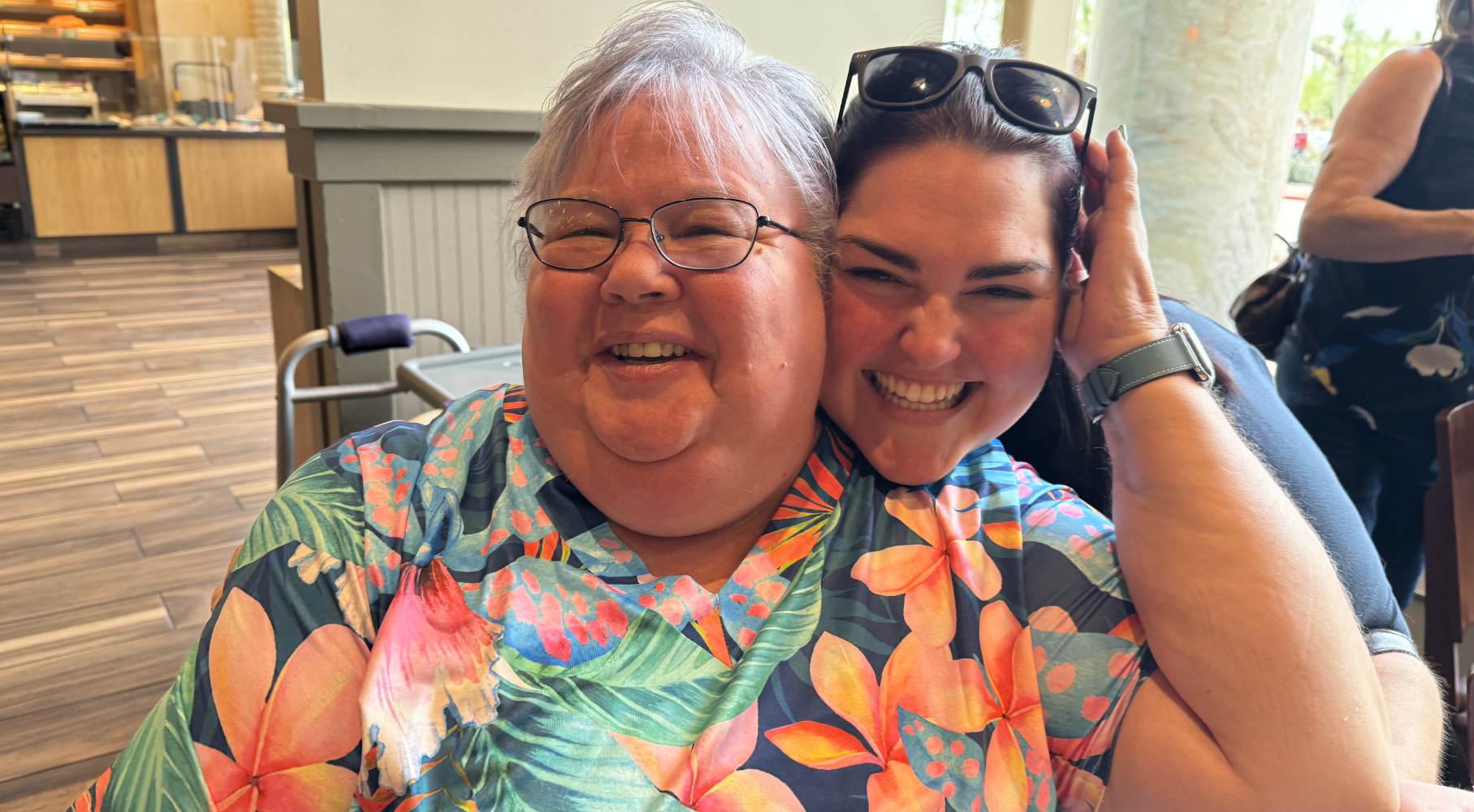
Throughout her journey, Megan’s support system has been a constant source of strength. Her parents, sister, aunt, and cousin form her core circle, while her “vasculitis family” provides understanding that only shared experience can bring. “My dad often drives me to appointments. My core group shows up for my infusions,” she said.
Together, they’ve also turned advocacy into action—participating in multiple 5Ks to raise awareness and demonstrate that people living with chronic illness can still show up, participate, and thrive.
She also credits patient resources and peer connections as invaluable. Through the Vasculitis Foundation, she has found both information and a community that understands the nuances of her experience.
Managing Flares and Prioritizing Self-Care
Although currently in remission, Megan has experienced minor flare-ups, which she manages proactively with her medical team. Early intervention—whether through medication adjustments, steroids, or increased self-care—has been key.
Fatigue is often one of the first signs, signaling the need to slow down. “Prioritizing self-care is something I’ve learned a lot about,” she said. That includes simple but meaningful rituals, like regular massages with her sister—moments that offer both physical relief and emotional connection.
Hope, Humor, and Perspective
Looking ahead, Megan finds hope in the people who have walked this path before her and in the relationships she has built along the way. “Being able to lean on my friends who have been through this means more than I think a lot of people realize,” she said.
Her outlook is grounded in honesty—but also in humor. “Learn to laugh,” she advised. “Sometimes it’s small laughs, and sometimes it’s the deep belly laughs that fill your cup.” Those moments, especially when shared, have become essential to how she navigates life with vasculitis. “We wouldn’t wish vasculitis on anyone,” she reflected, “but I can’t imagine my life without the people I’ve met along the way.”
A Message to Others
Megan’s message to those newly diagnosed is clear: “You are not alone. Your life is not over. You may have to make accommodations, but you can still do the things you love.” And perhaps most importantly: learn to speak up, lean on others, and hold onto the parts of yourself that illness cannot take away.