
More Than a Diagnosis:
Susie Nilsson’s Story of Growing Up With EGPA
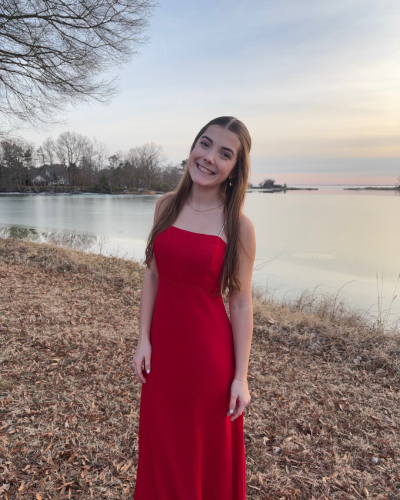
At 16, Susie is a student, athlete, performer, musician, and aspiring advocate. Living in Lexington Park, Maryland, she is a varsity field hockey captain, a lacrosse midfielder, a singer, and a drummer. She loves theater, chorus, and finding new ways to express herself.
She is also living with eosinophilic granulomatosis with polyangiitis (EGPA), a rare form of vasculitis that doctors began suspecting when she was 11. Reaching a presumptive diagnosis involved months of testing, frightening uncertainty, and a family determined to find answers and effective treatment.
Today, Susie is thriving. She plays sports, performs, does well in school, and looks forward to college. By sharing her experience, she hopes to help other young people with chronic illnesses feel less alone, raise awareness of childhood EGPA, and advocate for better access to treatment.
When Something More Than Asthma Was Happening
Susie experienced respiratory and allergy problems from childhood. She received regular allergy shots and was diagnosed with mild persistent asthma around age 8 or 9. She also underwent multiple ear and sinus surgeries.
Months before Susie’s eventual EGPA workup, her mother, Holly, researched the disease after finding that Susie’s symptoms and laboratory results seemed to match what she was reading. When Holly raised the possibility with their local asthma and allergy physician, she recalls being told, “that is not a disease children EVER get.”
In early 2021, at age 11, Susie went to the emergency department after experiencing abdominal pain for about a week. During the visit, she suffered a severe reaction involving anaphylaxis and a prolonged episode of status asthmaticus, a life-threatening form of asthma characterized by severe, persistent breathing difficulties.
Transferred to Children’s National Hospital in Washington, DC, Susie received intensified asthma treatment. A pulmonology fellow working under Dr. Michael Tsifansky initiated the EGPA workup, and Dr. Tsifansky performed her bronchoscopy.
Despite treatment, Susie’s breathing remained problematic. Pulmonary function tests showed persistent abnormalities, and she experienced weight loss, reduced appetite, and elevated inflammatory markers. Further investigations raised concerns about several serious conditions, including cystic fibrosis and inflammatory diseases.
In September and October 2021, blood tests revealed elevated eosinophils, a type of white blood cell involved in inflammation, while a CT scan showed ground-glass opacities in her lungs. During a procedure that also addressed her nasal polyps, bronchoscopy testing showed that 69% of the cells recovered from her lungs were eosinophils. These findings supported EGPA as the presumptive diagnosis, although Susie never developed a documented vasculitic phase.
Approximately eight months had passed since her initial severe respiratory episode. “It took about eight months to get a diagnosis and this was a pretty awful process,” Susie recalled.
The COVID-19 pandemic made the uncertainty especially difficult. Holly was working as a nurse practitioner in urgent care and was regularly exposed to COVID-19, while Susie was not yet eligible for vaccination. “This meant that I could go not go anywhere, and that my family had to be incredibly careful about going places or seeing anyone,” Susie said. “The intensity of the process was elevated because the problems that would come from getting COVID while on steroids were terrifying.”
At the time, she didn’t fully understand how frightened her parents were. Looking back, she recognizes the emotional toll. “Honestly, it was really hard and as I look back on it, I recognize a lot of things that I didn’t recognize when I was 12,” she said. “I didn’t really understand the extent of the situation at the time, but because I saw how scared my parents were, the reality of the situation was set into place.”
Finding the Right Treatment
Susie began taking 40 mg of prednisone daily in December 2021, two months after her bronchoscopy and presumptive diagnosis. During the COVID-19 pandemic, coordinating follow-up appointments between pulmonology and rheumatology at Children’s National proved difficult. The family lived about an hour and 45 minutes away, and it took approximately two months for testing and findings from the two departments to be communicated and a treatment plan established. Holly remains grateful to the Children’s National team for pursuing a diagnosis. However, she was concerned about relying on long-term steroids.
After five months on 40 mg of prednisone, Susie’s liver enzymes were rising. Because she was immunosuppressed, she also required antiviral medication and monitoring of her bone density and A1C levels.
The family explored biologic medications that might control her disease while reducing reliance on steroids. They initially sought insurance approval for Nucala (mepolizumab), a biologic medication administered by injection. After the request was denied through the Children’s National system, Holly says the family was unable to persuade the team to submit an appeal or try again. At approximately $6,000 per month, the medication was prohibitively expensive without coverage.
Although grateful for the diagnosis, the family was not comfortable with the prospect of long-term steroid treatment and continued searching for a specialist experienced in childhood EGPA.
Dr. Abigail Bosk, the rheumatologist who initially evaluated Susie at Children’s National when an autoimmune disease was suspected, supported the family’s decision to transfer care to Dr. Eveline Wu at University of North Carolina (UNC) Children’s Hospital because of her experience with EGPA.
At UNC, the family found a more coordinated approach. Susie now attends joint pulmonology-rheumatology appointments with Dr. Wu and pulmonologist Dr. Timothy Vece. Initially scheduled every three months, these visits are now generally held every six months.
The family drives five hours for appointments that bring the specialists together. Susie completes pulmonary function testing, reviews the results with both physicians, and has laboratory work done. Dr. Wu follows up online several days later.
Clinical pharmacist Alice Pan often joins the visits to discuss medications and answer questions. Holly particularly appreciates Alice’s persistence in navigating lengthy insurance appeals to secure appropriate treatment for Susie.
Between January and April 2022, the family secured insurance approval for Nucala, and Susie was able to taper off prednisone. Treatment required further adjustments: she underwent another nasal polyp removal in 2023, and her asthma symptoms and inflammation worsened during the winter of 2023–2024 while she was taking Fasenra®. Following an interruption in treatment after an insurance coverage change, she returned to Nucala in spring 2024.
Since then, her lung function has returned to normal limits. She has had no further asthma exacerbations, shown no signs of vasculitis, and maintained normal laboratory results.
Susie also continues to receive care close to home from asthma and allergy specialist Dr. Pradeep Simlote when she has immediate concerns or flare-ups. For ongoing ear and sinus care, she sees Dr. Alexandra Espinel, an otolaryngologist at Children’s National who has treated her since age 8. Because nasal polyps may recur, Susie continues regular ENT follow-up.
Her experience has shown the family that managing a rare disease involves more than obtaining a diagnosis. It requires knowledgeable specialists, coordinated care, continued monitoring, and persistence in navigating insurance and treatment options.
A Life Beyond Illness
Now in 11th grade, Susie plays field hockey and lacrosse, captains her varsity field hockey team, sings in chorus, plays drums, and enjoys theater. “Since I was diagnosed, theater has always been an outlet for me and I love stepping into a role where I can then be somebody else,” she said.
Today, vasculitis has little effect on her ability to participate in the activities she loves. “Now living with vasculitis barely affects my life in school, activities, sports, or any other things I enjoy!” She is grateful for the opportunities effective treatment has made possible. “My life is relatively normal and I praise God for all the things I am able to do,” she said.
Still, doing well medically doesn’t mean the emotional side of chronic illness disappears. As Susie has grown older, she has begun asking more questions and reflecting on what she experienced. “I think it is mostly because I started asking questions and understanding. I’ve seen everything that I’ve gone through and I wish that nobody ever has to go through that,” she explained.
Sometimes she feels angry or upset about having EGPA; at other times, she feels grateful for her treatment and her life. Both feelings can coexist.
Her Christian faith and her mother have been important sources of support. “The whole time my faith as a Christian and love for Jesus has kept me going that I never have to be in control but that he is and he will continuously be by my side no matter what I am going through,” she shared.
She also credits her mother for taking her to appointments and always being willing to listen. “My mom has also been a huge part by taking me to everything and always being willing to listen and talk to me,” Susie said.
Empathy, Not Pity
Susie wants people to understand that young people with chronic illnesses need empathy, not pity.
“I wish other people understood the difference between empathy and pity,” she said. “There’s a huge difference between being understanding and feeling sorry for someone.”
Rather than assume they understand another person’s experience, she encourages people to listen and acknowledge when something sounds difficult. ”Saying something as simple as ‘that sounds really hard’ is better than saying you know what it’s like or you understand,” she said.
Most importantly, she wants others to remember that a diagnosis is only one part of a person’s life. “I also wish other people understood that just because I live with vasculitis doesn’t mean that’s the only thing you should ask about,” she said. “I am a person, not just my diagnosis and although my health is a huge part of my life there are hundreds of other things I do.”
For Susie, being understood means having people take an interest in her friendships, school, sports, music, and ambitions—not just her health.

Turning Experience into Hope
Susie hopes to help other young people with vasculitis and chronic illnesses feel less alone. “Some days it’s really hard to think or talk about,” she admitted. “I honestly just want to help other kids with vasculitis and chronic illnesses to show them that there are people who understand.”
She is particularly passionate about raising awareness of EGPA in children and improving access to essential medications. Her family’s experience has shown her how important it is to find experienced specialists and secure effective treatment.
Susie is also exploring possible careers in healthcare. This summer, she spent three days at Children’s National shadowing pharmacists, clinicians, and therapists. She hopes to return for a more extensive internship in summer 2027.
For young people newly diagnosed with vasculitis, Susie acknowledges that the road ahead may be frightening, but encourages them to trust their doctors and find healthy ways to express their feelings.
“To another person who has just been diagnosed with vasculitis, I would say it’s going to be scary and hard sometimes but trust your doctors,” she said.
She recommends journaling or talking with a trusted, compassionate friend. Connecting with someone who has experienced something similar can be especially meaningful. “Even better, a person that has gone/is going through something similar so you guys understand each other and can talk about it together!”
As senior year approaches, Susie is looking forward to exploring career options and finding a college she loves. “Right now, I am looking forward to the fun of senior year, deciding on possible career choices, and going to a college that I love!” she said.
At 16, Susie is still making sense of her experience, navigating complicated emotions, and discovering how she can help others. She is also busy being a teenager and planning for the future.
Through sharing her story, she hopes other young people will know they aren’t alone and that greater awareness of childhood EGPA will lead to more compassionate care and better access to treatment.
Her story is a reminder that a diagnosis may change parts of a young person’s life, but it never tells the whole story. Susie is an athlete, a performer, a musician, a student, a daughter, a person of faith, and an aspiring advocate. And she is just getting started.