
Finding Joy Deeper Than Despair:
Melody Pedings’ Vasculitis Journey
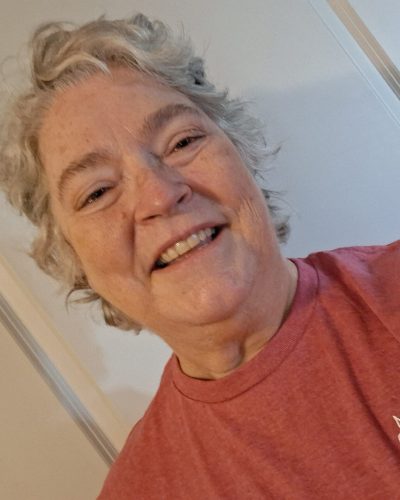
For Melody, life in rural central South Carolina has always centered around family, faith, community, and the simple joys of everyday life. At 66, she enjoys gardening, spending time with friends, and being active alongside her husband, Mike, in their church and community. Above all, her greatest joy is her family—especially her three grandchildren.
Today, Melody is learning to live with a disease she had never heard of before her own diagnosis: ANCA-associated granulomatosis with polyangiitis (GPA), PR3-positive.
Nine Months to a Diagnosis
Melody’s first symptoms appeared in February 2024, when her left ear suddenly felt stopped up. Fluid built up, causing hearing loss and tinnitus. Antibiotics did not help, and over the following months, both ears became involved. She also developed fatigue and intermittent low-grade fevers.
Multiple visits to her primary care physician and three ENTs followed. As pressure in her ears increased, one ENT ruptured her eardrums and placed tubes in both ears, but there was no relief. Another ENT ordered an MRI and CT scan, leading to a suspected cranial cerebrospinal fluid (CSF) leak.
On July 5, 2024, Melody underwent cranial CSF repair. During the procedure, the surgeon also found purulent fluid in her left mastoid and performed a mastoidectomy. Unfortunately, the surgery did not resolve her symptoms. Through August, her malaise, ear drainage, and breathing problems continued to worsen.
By September, her breathing had deteriorated enough to send her to the emergency room. In October, her pulmonologist performed a lung biopsy because her lungs were filled with an abnormal substance. The biopsy did not show cancer, and she was sent home with oxygen.
Then, in November, Melody began coughing up blood, and her kidney function was declining. On November 9, she returned to the emergency room. This time, she was admitted, and her hospitalist, Dr. Troy Gamble, and his team began working to determine what was causing her increasingly serious symptoms.
Her nephrologist, Dr. Jeremy Sorkin, quickly recognized the possibility of ANCA-associated disease. A kidney biopsy ultimately confirmed the diagnosis: ANCA-associated GPA. Dr. Sorkin immediately began treatment with high-dose intravenous Solu-Medrol®. Melody received her first rituximab infusion on November 13 and was discharged November 15 on prednisone. But the crisis was not over.
On November 19, after expressing concern about increasingly red blood in her cough, Melody collapsed in her bathroom and could not get up. She was taken to the hospital by ambulance and quickly transferred to the ICU.
The following week included some of the most frightening moments of her life. She feared needing a ventilator, although thankfully that never happened. She received blood transfusions, six plasma exchange treatments over two weeks, and a Cytoxan® (cyclophosphamide) infusion.
Eventually, she was moved to step-down (intermediate) care, where she celebrated Thanksgiving with her family and Debbie, her plasma exchange nurse. She was released from the hospital on December 3, 2024. “I call that my new birthday,” Melody said.
Before experience, vasculitis was completely unfamiliar territory to her.
Learning to Live with Vasculitis
Melody’s current treatment includes azathioprine, 150 mg daily; prednisone, 10 mg daily; and rituximab infusions every six months, with two infusions two weeks apart. The side effects have been manageable, although she experiences some nausea, muscle loss, and headaches.
The disease itself has brought greater challenges. Fatigue and muscle weakness have become part of her daily life. She has experienced hearing loss and constant tinnitus, shortness of breath, and loss of kidney function. She continues to experience pressure in her ears, which can change with the weather, and hearing aids help somewhat with her tinnitus. She does not know whether her earlier ear and CSF problems were related to GPA.
Perhaps the biggest change has been the unpredictability of her energy. “I am so tired that I often have to nap,” Melody said. She is hesitant to commit to plans because she never knows how she will feel on a particular day. That has been difficult for someone who has always considered herself dependable. “I have always been a reliable person, and for the first time in my life, I was too sick to push through. And that really hurt. It made me feel like I couldn’t be trusted.”
Still, Melody has found ways to adapt. She may not be able to play with her grandchildren the way she once did, but they cook together, watch movies, and attend their many extracurricular activities.
Gardening has changed, too. Melody now gardens for about 10 minutes at a time, early in the morning when it is cooler. She has shifted toward perennials and uses a table for planting pots. When something is too heavy to move, Mike helps.
These small adaptations allow her to continue participating in the activities and relationships that bring her joy.
A Strong Circle of Support
Melody credits a wide network of people with helping her navigate her illness. Her husband, Mike, her four grown children, friends, and church family are central to her support system.
Her doctors have also played an important role. Melody gives special credit to her hometown primary care physician, Dr. Timothy Shaver, who continued ordering tests and referring her to specialists when answers remained elusive. He ultimately referred her to Mayo Clinic in Jacksonville, Florida.
She is especially grateful to her first nephrologist, Dr. Sorkin. “I thank God for him,” she said.
His knowledge of ANCA-associated disease was critical in identifying what was happening, but Melody says his support extended beyond medical treatment. His attention to her mental well-being helped her begin accepting the diagnosis and learning how to live again.
Her current rheumatologist, Dr. Whitney Martin, has become another important partner in her care.
“She is the BEST,” Melody said. “She listens and we collaborate on my care.”
Her new pulmonologist, Dr. Jaimie Seawell, has also helped improve her breathing. Melody says she is now breathing better than she has in more than a year.
In September 2025, Melody traveled to Mayo Clinic in Jacksonville, where she saw specialists in nephrology, pulmonology, neurology, and rheumatology. She says the doctors were wonderful and especially appreciated the patience of Dr. Andy Abril, the rheumatologist.
When asked why she had come to Mayo, Melody’s answer was simple: “To ensure I was doing everything not to have another major flare.” She was advised to protect herself from infection through measures such as handwashing, mask wearing, and avoiding crowds. She has continued to reach out to Dr. Abril with questions and says his responses have helped her make decisions about her care.
Melody has also found connection through the vasculitis community. She joined a Vasculitis Foundation (VF) Support Group in January 2026 and participates as a Vasculitis Patient-Powered Research Network patient research partner in a study examining remote patients and the effects of difficulty accessing care.
“I am so fortunate to have the family, friends, the support group, church and doctors for support,” she said. “I pray everyone has a wide net to cast when they need help.”
Finding Joy and Purpose
The emotional impact of her diagnosis was significant, particularly in the beginning. Melody continues to live with uncertainty and ongoing symptoms, and she is not yet in remission. In July 2026, she experienced another flare and was hospitalized after developing a low-grade temperature. Doctors determined it was not an infection, and she received 500 mg of intravenous Solu-Medrol.
Even with another difficult setback, her perspective has continued to evolve. “Now, I am learning to live with the disease and accept and be thankful for the place I am at in this journey.”
Education has become an important part of that process. Melody learns about ANCA-associated GPA through reliable healthcare websites, VF webinars, and support groups. That knowledge has helped her become a more active participant in her own care and better understand the challenges of chronic illness.
Melody also hopes her experience can make the path easier for others. She wants to be “part of answers for the next generation of people who suffer with vasculitis.”
Her faith and family continue to give her purpose. She remains hopeful for improvement in her lung and kidney function while finding ways to help others and stay connected to the people she loves.

One quote has become a particular source of strength. It comes from Corrie ten Boom: “I promise you that joy runs deeper than despair.” Those words capture something important about living with chronic illness. Joy does not mean the difficult days disappear. It means that even alongside uncertainty, fatigue, loss, and fear, there can still be reasons to be grateful and hopeful.
Her Advice to Others
Looking back on her journey, Melody has several pieces of advice for someone newly diagnosed with vasculitis: “Learn as much as you can, join a VF support group, find purpose in every day by helping others, and always advocate for yourself.” It is advice shaped by experience.
Melody is still living with vasculitis. She continues to face fatigue, weakness, hearing loss, tinnitus, shortness of breath, and kidney-function challenges. But she is also gardening when she can, spending time with her family, leaning on her faith, learning from others, and looking toward the future.
Her life is different now—but it is still filled with family, faith, purpose, friendship, and joy.
Her journey is still unfolding, and she hopes that by sharing it, she can help someone else feel a little less alone when their own journey begins.