Swimming Through Uncertainty:
Caitlyn Friebe’s Journey to GPA
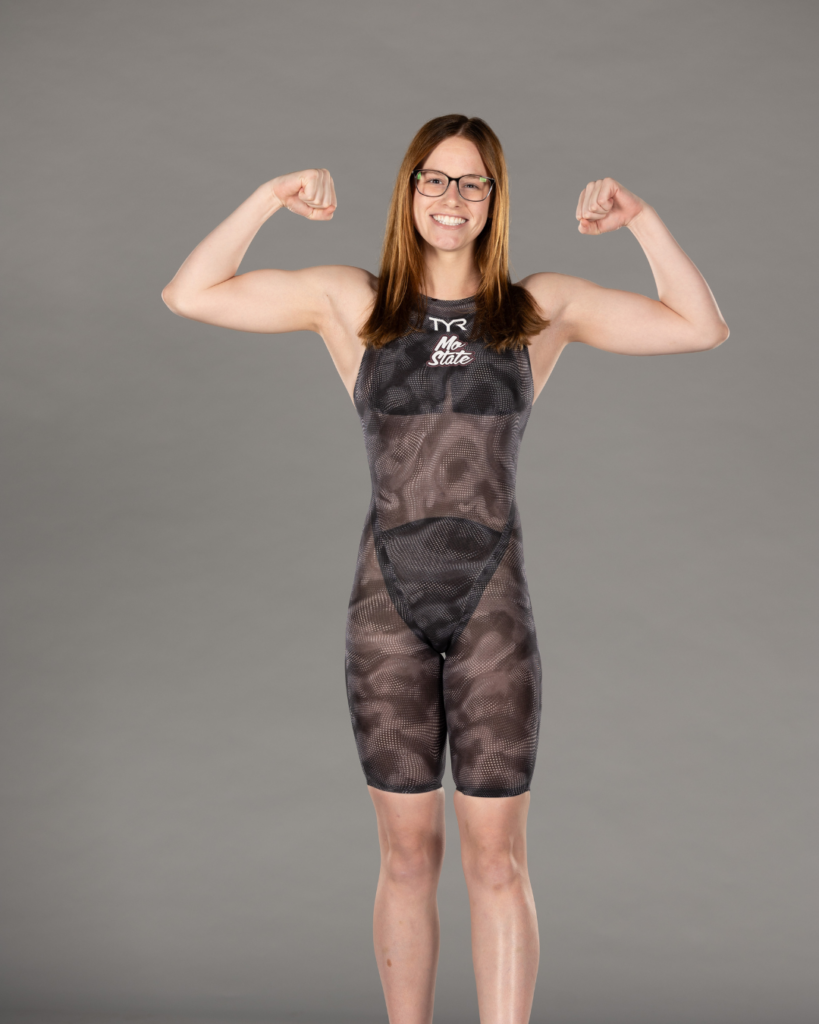
For most of her life, 20-year-old Caitlyn has measured time in laps, splits, and swim seasons. A Division I collegiate swimmer from Springfield, Missouri, her world has long revolved around the discipline and demands of the pool. From a young age, she learned how to show up early, put in the hours, and build the mental and physical stamina required to compete.
Spring 2025: Something Felt Different
“Athletes are taught to push through discomfort and trust that it’s part of the process,” Caitlyn explained. “But athletes are also very in tune with their bodies—and something felt off.”
At just 19 years old, she began experiencing unusual fatigue during March and April of 2025. Initially, the symptoms didn’t point clearly to anything serious. Over the next several months, she underwent extensive testing: lab work, EKGs, MRIs, and appointments with specialists, all searching for an explanation. Despite the thorough workup, everything continued coming back normal.
Through it all, Caitlyn said her primary care physician, Dr. Landon Hough, was relentless in trying to find answers. “He worked to check every single box he could think of,” she said. “He was always on my team, never made me feel dramatic, and helped in every way he possibly knew how—even when we had no answers.”
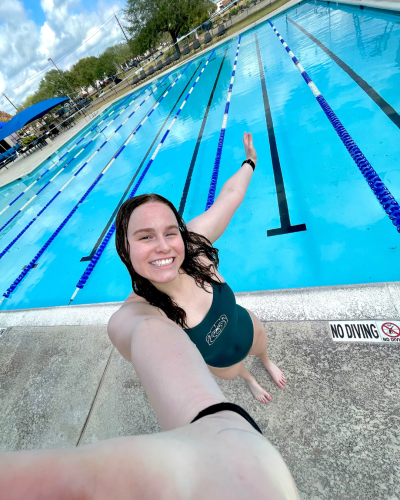
The only thing left unexplored was pulmonary function because Caitlyn was diagnosed with asthma in 2019. “I’d had numerous PFTs [pulmonary function tests] done throughout the years and I was on meds that kept it pretty much under control.”
At one point during the summer of 2025, abnormal cortisol levels led physicians to investigate possible secondary adrenal insufficiency. Caitlyn underwent an adrenocorticotropic hormone (ACTH) stimulation test and met two of the three diagnostic criteria, though the diagnosis was never officially confirmed.
Her Symptoms Continued Escalating
By August 2025, she had begun coughing up blood. Initially, the bleeding was thought to be sinus-related, especially given her history of asthma. But in October, things changed rapidly. After developing lower chest pain while breathing, imaging revealed something far more serious: cavitary lesions and nodular densities in her lungs. On October 21, 2025, Caitlyn was pulled from the pool indefinitely. “I wasn’t sure when I’d be back in,” she said.
What followed was a whirlwind of testing and specialist appointments: X-rays, CT scans, extensive blood and urine testing, a pulmonology referral, bronchoscopy procedures, nephrology consultations, and kidney biopsy. Her care team included pulmonologist Dr. Madhu Pendurthi, nephrologist Dr. Giselle Kohler, and rheumatologist Dr. Jo Ellen Feugate.
Finally, on November 4, 2025—roughly seven to eight months after her first symptoms began—Caitlyn received a diagnosis: granulomatosis with polyangiitis (GPA). “Hearing that diagnosis was overwhelming, yet relieving,” she said. “Relieved that I finally had answers… overwhelmed by what the rest of my swimming career would look like.” Before her diagnosis, Caitlyn had never even heard of vasculitis.
For an Athlete, the Body is Everything
Suddenly, Caitlyn was faced with the reality that her body was fighting something she couldn’t outwork or out-train. “There was a conversation with medical staff that I had a long road ahead,” she recalled. “My diagnosis was reason enough for me to medically retire if I didn’t feel like I could handle it.”
But walking away never felt like an option. “That never even crossed my mind,” she said. Instead, Caitlyn made a mental shift. Where her goals once centered around performance, pace times, and competition, they now centered around healing. “The goal became simply getting back in the water,” she said.
For six weeks, she stayed out of the pool entirely. When she finally returned, it wasn’t to pick up where she had left off—it was to start over. “I was pretty much starting from square one,” she said. “But being back meant more than any practice or race ever did.”
That gradual return carried a deeper meaning. “It reminded me of why I love this sport in the first place,” Caitlyn reflected. “Even on the hardest days, being able to move my body and be back in the water felt like reclaiming a small part of myself.”
One of the hardest parts of the experience, she said, was feeling disconnected from both her body and the sport that had always felt so familiar to her. Being pulled away not only from swimming, but also from her work as a club swim coach, took a significant emotional toll. “The uncertainty of what the rest of my swimming career will look like can still be hard mentally and emotionally,” she said.
Still, she has found herself grounded by gratitude. “Going through this whole process has shown me how blessed I am for my support system and the opportunity to move my body,” she said. “I am currently living so many answered prayers, and I have so much gratitude, even when my diagnosis feels overwhelming.”
Caitlyn’s Support System
Family, friends, teammates, coaches, and trainers became essential throughout her recovery. So did her faith. “Throughout this process, my faith has grounded me in ways I didn’t expect,” she said. “There were moments of uncertainty where I didn’t have answers, but I’ve learned to trust that there is purpose even in the waiting.”
Today, Caitlyn is being treated with rituximab and Tavneos®. Her kidney disease is currently in remission, and while she has not yet had imaging to formally confirm remission in her lungs, her medical team believes she is moving in that direction.
She has now been back at team practices for several months, slowly rebuilding strength and confidence. She has not yet returned to racing, but she remains hopeful about what lies ahead. “Hope for me has come from realizing that my journey isn’t over just because it looks different than I expected,” she said.
That perspective has changed the way she defines success—not only in swimming, but in life. “I have to remind myself that it’s okay to redefine success,” she said, “especially in the pool.” For now, simply being back in the water is enough.
And to others newly diagnosed with vasculitis, Caitlyn offers this reminder: “Healing takes time, and progress may look different than it used to, but small victories still matter. And through all the chaos and uncertainty, there are so many things to be grateful for.