Search

Finding Her Voice Again:

Patricia McKenzie’s Journey with GPA

Patricia, a 56-year-old school-based occupational therapist from Calhoun, Georgia, has built a life rooted in family, resilience, and service. Married to her “wonderful, supportive husband” for over 33 years, she is the proud mother of four adult children. But in February 2005, when her youngest was just two years old, her life took an unexpected turn.

It began suddenly. “I was on a movie date with my husband and I started peeing blood,” she recalled. After a week of uncertainty, she was referred to Emory Healthcare in Atlanta. A series of nephrology consultations led to an ANCA panel—despite low suspicion for vasculitis—which came back positive.

By then, Patricia was already in acute kidney failure. Within two and a half weeks as an inpatient, she was diagnosed with granulomatosis with polyangiitis (GPA). She underwent aggressive treatment, including six rounds of chemotherapy (Cytoxan®), followed by seven years on Cellcept® and a year on prednisone. By 2012, her labs had stabilized.

Patricia and her husband pictured smiling outside with their two small dogs on Thanksgiving

Years in Between

For a time, things seemed under control. But by 2014, a persistent cough emerged. Despite seeing multiple specialists, a rheumatologist was never part of her care. “One had never been mentioned,” she said.

Between 2014 and 2023, Patricia’s symptoms were treated in isolation. She underwent sinus surgery and managed mild subglottic stenosis, while her labs remained stable and ANCA tests negative. “My labs were always good,” she said, which may have contributed to the fragmented approach. One ENT reassured her, saying, “You know your own airway.”

Looking back, Patricia sees that period differently. “I really didn’t deal with it and I probably should have,” she admitted.

When Something Felt Off

In 2025, Patricia noticed a troubling change: her voice began to fade. “By July I was very hoarse,” she said. When initial treatments, including a vocal cord injection, failed, she began to question whether her symptoms were connected. “I said, could this be related to the vasculitis?” she recalled. That question marked a turning point.

Finding the Right Care

That fall, Patricia connected with a rheumatologist, Dr. Kelly Weselman at Arthritis and Rheumatology of Georgia. “She helped me when I was very desperate,” Patricia said. With renewed direction, she began treatment with Rituxan® infusions and weekly methotrexate, along with Biaxin® three times a week. Today, she remains on maintenance therapy and is in the middle of another round of infusions.

Over the past year since she lost her voice, Patricia has sought care across the country, including at Vanderbilt, Mayo Clinic, and most recently Cleveland Clinic. She is now preparing for a procedure to address scar tissue and further evaluate her subglottic stenosis—something she hopes will improve her voice. A cure may not be possible, but her care team is optimistic. 

“I will be on treatment forever, I’m sure—but I feel pretty good other than my voice.”

“My Priority Has to Be Work”

Despite the challenges, Patricia continues to work full time in a demanding role. As the lead occupational therapist in her district, she manages a caseload of over 100 children and has completed more than 70 evaluations in a single year.

“The biggest challenge is my voice,” she shared. “I don’t talk on the phone.” To adapt, Patricia relies heavily on written communication and assistive technology. She uses text-to-speech tools, including Natural Reader, to help summarize evaluation reports during meetings. For sessions with students, she uses a microphone to amplify her voice. There’s far more texting now, and her husband often makes phone calls on her behalf.

“It has impacted my relationships,” she said. “People don’t always understand that I cannot talk or that it hurts my throat.” Still, she feels supported at work. “My co-workers were very helpful,” she said, and the children she works with—many on the autism spectrum—“do not seem to mind.”

“A Huge Loss with My Voice”

Emotionally, the impact has been significant. “I haven’t felt like the same person,” she admitted. Communication, identity, and connection have all been affected.

She leans on a strong support system, especially her husband, Sean. “I have endless support and love from my husband,” she said. While her four children—Molly, Zack, Luke, and Walt—are deeply supportive, Patricia is mindful not to place too much of the burden on them. “They were so young when I was first diagnosed,” she said. “Sean and I really handle most of it.”

Now adults, her children remain closely involved. Walt has accompanied her to long infusion appointments, and the family continues to celebrate milestones—Zack was married in December, Walt got engaged in March, and Molly is married as well. Even her cavapoo, Ozzie, provides steady emotional support.

Patricia also prioritizes her physical health. She walks at least 10,000 steps daily and incorporates strength training twice a week. “I do get winded if I’m going uphill, but overall, I do pretty well,” she said.

Reflecting on her journey, Patricia acknowledges both resilience and regret. “I do wish I had a rheumatologist all those years so I could have better protected my voice,” she said. “Some local providers let me down. But I have to move forward.”

Looking Ahead

Patricia approaches the future with cautious optimism. She hopes her upcoming procedure will improve her voice and is considering next steps as her current rheumatologist retires. Her mantra is simple: “I love the Serenity Prayer.”

She and her husband had planned to travel to Europe beginning June 1, but those plans have been postponed. They hope to go next summer for their 35th anniversary.

Despite everything, one aspect of her experience remains isolating. “I don’t know another soul with GPA,” she said.

For those newly diagnosed, her advice is direct: “Get a rheumatologist!!! Don’t be stubborn about Rituxan or other recommended meds. You don’t want to end up with no voice!”


 

More For You

Explore helpful resources, personal stories, and supportive tools to guide you through every step of living with vasculitis.

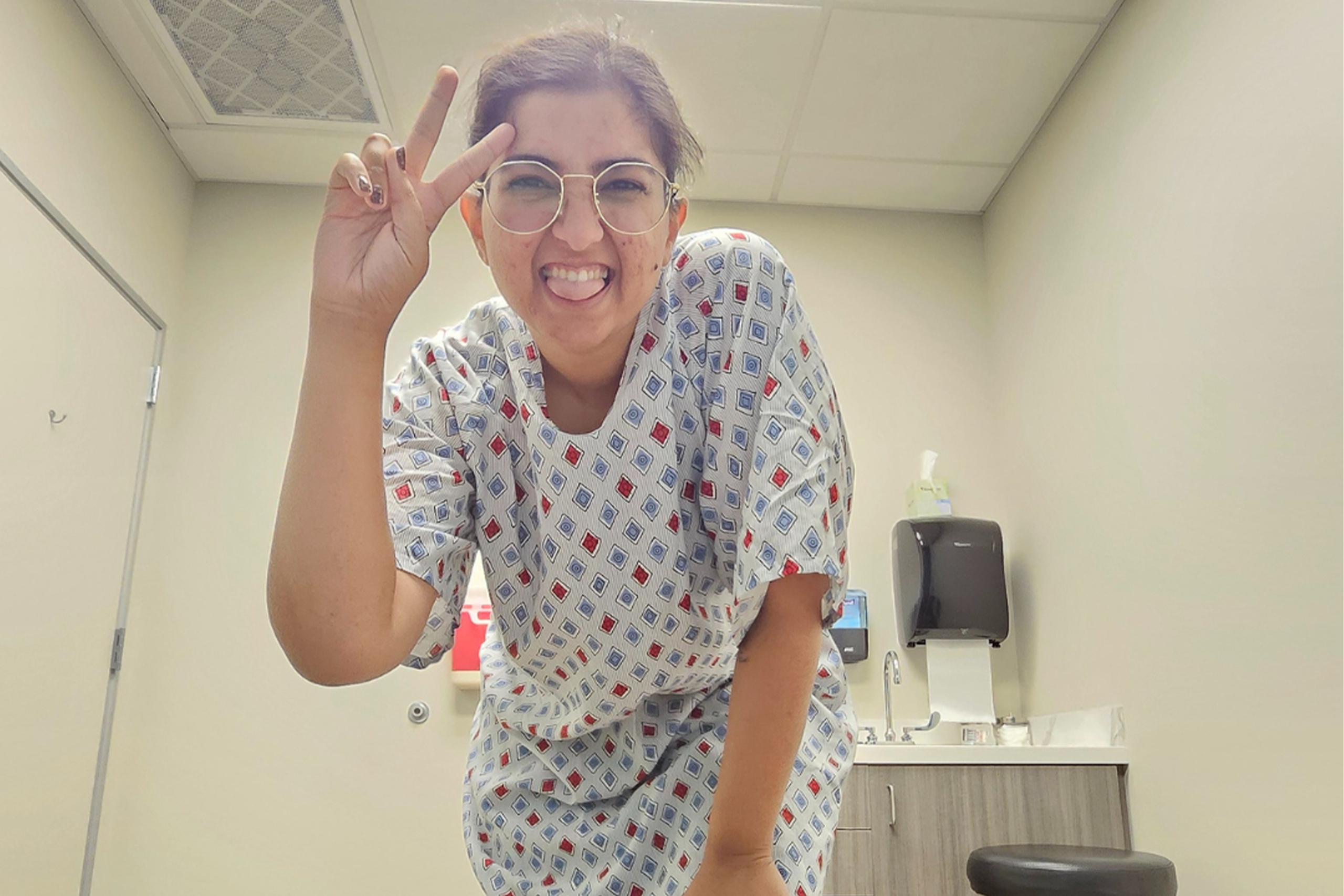
Smiling person wearing a hospital gown makes a peace sign toward the camera in a medical exam room.

From Our Blog

Stay informed with voices from the vasculitis community, expert commentary, and updates on research, treatment breakthroughs, and quality-of-life topics.
»

Video Library

Access our growing collection of videos and webinars featuring patient experiences, clinician discussions, treatment explanations, and practical tips for managing life with vasculitis.
»

Support Patient Stories

Stories like this one take time, trust, and resources. When you donate, you make it possible for more patients to be heard — and for more people to feel less alone.
»