
The Signs I Learned to Live Around
For years, my body had been giving me signs that something wasn’t right.
The symptoms were subtle at first, coming and going in ways that were easy to dismiss. Fatigue. Aches. Illnesses that lingered longer than they should have. I learned to live around them. But in the months leading up to that day, everything worsened. The symptoms intensified, stacking on top of one another, until my body felt unreliable and unfamiliar.
Weeks before I drove myself to the hospital, a heavy and unsettling feeling took hold of me—a deep sense of impending doom I couldn’t explain or shake. It wasn’t panic. It was quieter than that. A knowing. As if my body understood something my mind had not yet caught up to.
When I could no longer ignore it, I drove myself to Emory Hospital in Atlanta.
I walked in alone.
During intake, the nurse asked the usual questions. I didn’t recognize her, and at first, she didn’t recognize me either. I didn’t look like I had in high school, and my last name had changed after marriage. But as the intake continued, something clicked for her. She paused, looked again, and suddenly realized who I was.
When Everything Became Urgent
That moment changed everything. She didn’t rush. She didn’t dismiss my symptoms. She insisted on further testing. Tests that revealed what no one else had yet seen. My kidneys were shutting down.
As doctors moved quickly, the seriousness of the situation became impossible to ignore. Before my lungs collapsed, before the machines and the chaos, I said something that terrified my family. I asked my sisters for my estranged father.
It frightened them deeply. They knew how complicated and distant that relationship had been. Hearing me ask for him made them understand just how sick I truly was. In that moment, they realized something I may not yet have fully grasped myself: my body was preparing for the worst.
Fighting for Life
Within three days, my lungs collapsed.
Weeks later, the diagnosis came: Wegener’s Granulomatosis (now called Wegener’s granulomatosis, or GPA), a rare and incurable autoimmune vasculitis. By then, I had already been fighting for my life.
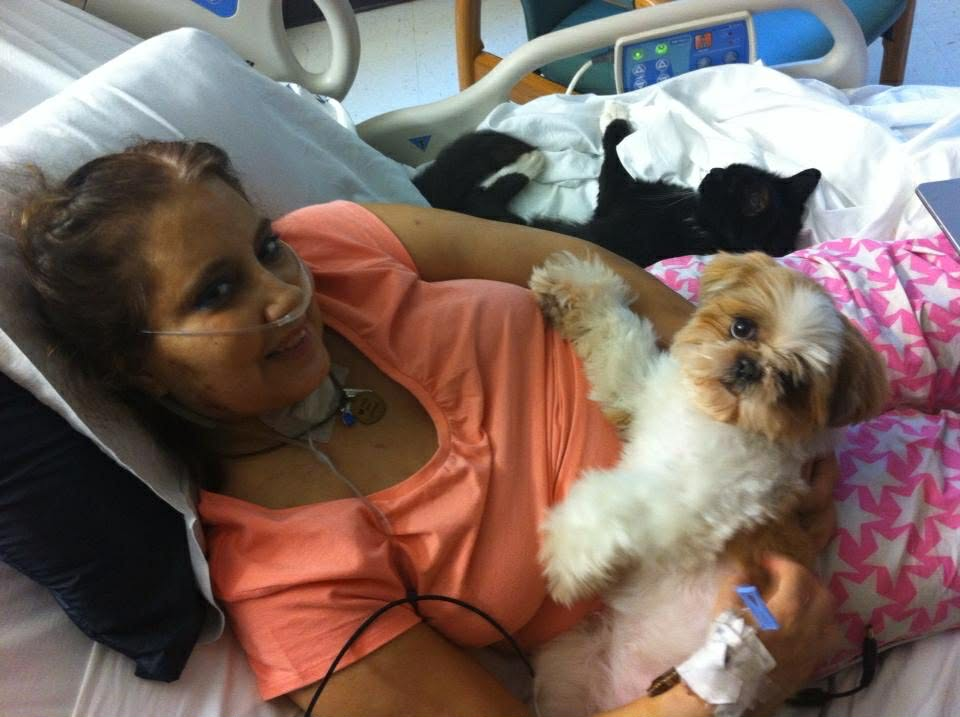
I spent 111 days in the hospital. I was placed into a coma for five weeks. Machines breathed for me while my body fought a disease I had never even heard of. Doctors tried repeatedly to wean me off the ventilator, but each time they did, my oxygen levels dropped dangerously low.
For the last 17 days of my coma, I was placed on ECMO, a form of life support used only when the lungs can no longer do their job. My blood was oxygenated outside my body to keep me alive—an extraordinary, last-resort measure.
At the same time, my body endured aggressive treatment. I underwent plasmapheresis to remove the antibodies attacking my organs. I received heavy doses of steroids, numerous blood transfusions, and Cytoxan, a powerful chemotherapy used to stop the disease from destroying what remained of my lungs and kidneys.
There were no guarantees. Doctors weren’t sure if I would wake up—or if I did, what kind of life I would have.

Waking Up Was Only the Beginning
When I finally woke up, survival was only the beginning.
I spent three years on oxygen, learning how to live again in a body that no longer felt like my own. The strong, independent, vivacious woman I once was had been replaced by someone more fragile, more cautious, more uncertain. I mourned that loss deeply—the loss of independence, confidence, and the sense of safety I had once taken for granted.
My sisters became my anchors—my saviors in ways I will never fully be able to express. And my animals, who had loved me unconditionally my entire life, gave me comfort when nothing else could. They reminded me why I needed to keep fighting, even on the days when the fight felt overwhelming.
Living With What Never Fully Leaves
Living with Wegener’s Granulomatosis changed me forever.
It made me more sensitive—not weaker, but more aware. More aware of pain, of fear, of the invisible battles people carry every day. It stripped away my illusion of control but gave me something deeper in return: empathy, resilience, and a profound appreciation for simply being alive.
This disease doesn’t disappear. It lingers. It waits. It reminds me that nothing is guaranteed.
But I am still here.
I drove myself to Emory Hospital guided by a quiet sense that something was terribly wrong. I survived organ failure, collapsed lungs, ECMO, chemotherapy, and a disease that had been silently attacking me for years.
Wegener’s Granulomatosis took a great deal from me.
But it did not take my spirit.